
A number of incidents show the striking incompatibility of Islamism and Palestinianism with modern medicine. Examples are listed in reverse chronological order, as they occur:
British health workers support Hamas: The Campaign Against Antisemitism released a documentary, "Malignant: Anti-Semitism in the NHS," that catalogues many Islamist attacks on Israel and Jewry. (October 10, 2026)
Antisemitism in New York City's health system: Members of the New York City Council met with representatives of more than a dozen healthcare organizations to discuss Jew-hatred in medicine. (September 15, 2026)
Antisemitism in the British health system: The Campaign Against Antisemitism published a report today, "Malignant: Antisemitism in the NHS." (September 15, 2026)
Antisemitism in Anglosphere hospitals: A study, "Anatomy of Antisemitism in Health Professions Education and Practice," published in the Rambam Maimonides
Medical Journal finds "an international resurgence in antisemitism in healthcare education and practice since October 7, 2023, prominently affecting the United States, United Kingdom, Canada, and Australia."(July 31, 2026)
Antisemitism in Australian hospitals: The Australian newspaper published a major review of the problem under the headline "Hospitals become front line in antisemitic onslaught." (June 26, 2026)
Belgian patient denied treatment: Jonath Weinberger entered a room where a doctor and a nurse were waiting for her and found the nurse "wearing a large pin shaped like a fist in the colors of the Palestinian flag." Weinberger whispered to the paramedic that she didn't feel safe being treated by someone displaying such a political statement and he cautiously asked the nurse if she could remove her pin. The nurse "reacted indignantly, muttered that she no longer wished to treat me and walked out of the room." (November 11, 2025)
Extreme anti-Jewish comments gets surgeon fired: The National Health Service dropped a surgeon, Manoj Sen, on account of his virulent remarks about Jews. (October 7, 2025)
British doctor rants, is arrested: The UK's Medical Practitioners Tribunal Service ruled that British-Palestinian Rahmeh Al-Adwan can keep working as a physician for the National Health Service despite stating on social media after Oct. 7 that Nazi persecution of Jews is a "fabricated victim narrative" promoted by "Jewish supremacists," despite defending the Oct. 7 massacre and glorifying Palestinian murderers as "martyrs." (September 28, 2025) Nov. 6, 2025 update: Al-Adwan wrote on X that the Royal Free Hospital in London is a "Jewish supremacy cesspit." She was subsequently arrested under suspicion of malicious communications and inciting racial hatred and suspended by the General Medical Council pending investigation. On Nov. 6, she posted a video on X stating that the "impunity given to Jews" has resulted in a "full-blown holocaust," and that there will be no justice "until we dismantle Jewish supremacy." Nov. 16, 2025 update: An unrepentant Al-Adwan claimed that "my hearing was completely ordered by, either straight from Tel Aviv, or at least certainly from the Jewish lobby in Britain. The police were just pawns. There is just no British independence. We don't have a sovereign Britain." Nov. 30, 2025 update: The Medical Practitioners Tribunal Service suspended Al-Adwan for 15 months.
Condition "Jewish": The AZ Zeno Campus Knokke-Heist hostpial suspended Qasim Arkawazy, a radiologist in Belgium of Iraqi origins, after he wrote a diagnosis that a nine-year-old patient's problem was that she is Jewish. (September 3, 2025)
Dutch home-care nurse: 34-year-old Btissame Chait-Said posted under her name on social media that "All Zionists can die in healthcare and I'm happy to help with that," "As a nurse specialist, I give them an extra injection to send them to heaven," and "Your day is coming. I won't spare a single Zionist." The police have opened an investigation. (August 4, 2025)
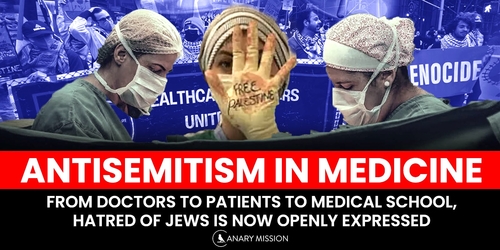
Canary Mission report: "Antisemitism in Medicine: From Patients to Doctors to Medical Schools, Hatred of Jews Is Openly Expressed." (April 24, 2025)
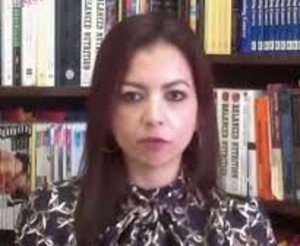 Lila Abassi. |
Norwegian Jews fearful: A letter signed by Marius Gaarder, chairman of the Jewish community in Oslo, and John Arne Moen from the Jewish community in Trondheim, states:
Shortly after October 7, 2023, alongside growing anti-Israel mobilization among segments of healthcare workers, health institutions, and medical experts, several members of the Jewish community expressed concern that they would feel uncomfortable seeking medical treatment and fear they wouldn't receive optimal care if they revealed they were Jewish."
An Israeli-Norwegian notes that Norway "is the only Western country that refuses to recognize the murderous organization Hamas as a terrorist organization." (March 26, 2025)
Two Australian nurses: In a videotaped conversation with an Israeli, Ahmad "Rashad" Nadir and Sarah Abu Lebdeh said what they would do to Israeli hospital patients:
Abu Lebdeh: "I won't treat them, I'll kill them ... Not God forbid, I hope to God."
Nadir: "You have no idea how many Israeli ... dog came to this hospital and ... I literally sent them to [the afterlife]," slicing his hand across his neck.
The remarks led to a national uproar. (February 14, 2025) Feb. 26, 2025 update: Lebdeh has been criminally charged. Mar. 5, 2025 update: Nadir has also been charged. Feb. 3, 2026 update: They pleaded not guilty. June 23, 2026 update: The judge in their case, Michael McHugh, ruled that the video cannot be admitted as evidence.
The American Jewish Medical Association: created to stand up to antisemitism in medicine. (May 19, 2024)
"Islamist antisemitism invades doctors' offices": That's the title of Dexter Van Zile's round-up of current problems, especially following Oct. 7. (April 25, 2024)
Assaults in Israeli hospitals: The news reports are coy about identifying the perpetrators but terms like "East Jerusalem residents" point to Muslims. Islamists? Cannot tell. (May 21, 2022)
Tip-toing around the hijab: The British Journal of Dermatology published "The Etiquettes of Hijab: Recommendations to Improve Care in Dermatology Clinics" by R. Rehman, A. Chabaan, I. Hamzavi, F. Fahs, and T.F. Mohamma. A summary version at the DermatologyAdvisor website gives the flavor:
- Address the hijab in a respectful manner. For example, refer to it as a "headscarf" or "veil."
- Ask the patient whether they prefer a man vs women healthcare provider, including support staff and trainees, if possible.
- Place the patient in a room on the perimeter of the clinic, decreasing accidental exposure if the door happens to be open.
- Arrange exam rooms so that patients are not seated directly in front of the door.
- Before seeing the patient, notify staff that the patient wears a hijab to allow for a smooth transition of care. This can be done via notes in the patient's chart or on the door of the patient's room.
(September 8, 2021)
Disposable hijabs: A resident in Derby, England, devised disposable hijabs for medical personnel. (December 19, 2019)
Doctor asks woman to remove niqab, is accused of racism, quits profession: Keith Wolverson, 52, an English physician, asked a Muslim woman to remove her niqab so he could better hear her, which she did. But when the woman's husband heard about this, he brought a charge of racism against Wolverson. After receiving a letter from the General Medical Council informing him that he was under investigation, he replied "I absolutely no longer want to be a doctor." He was then fired by his employer and quickly took up a new job giving hay fever and joint-pain injections, as well as administering Botox shots, to private clients. (May 28, 2019)
Muslim doctor loses job because of antisemitism: Lara Kollab, a Palestinian Muslim, tweeted how she would "purposely give all the yahood [Arabic: Jews] the wrong meds." On learning of this and other antisemitic statements, the Cleveland Clinic fired her. (January 1, 2019)
Saudi father shoots male doctor for assisting his wife's delivery: Dr Muhannad Al Zabn successfully delivered a baby a month ago at the King Fahad Medical City in Riyadh, Saudi Arabia. Quoting Gulf News:
the father went to the hospital and told the doctor he wanted to see him to thank him for helping his wife with the delivery of the baby. ... The two met in the garden of the hospital and during the conversation, the shooter took out a gun he had concealed under his clothes and fired at the doctor.
Why the assault? Because the Saudi father demanded a female obstetrician. And while most social media users sympathized with the doctor, some held that the father should have been granted his wish for a woman gynecologist. (May 26, 2016)
Cairo hospital system bans the staff from wearing niqabs: The president of Cairo University, Gaber Nassar, has banned nurses, graduate doctors, specialists, consultants, technical assistants and all academic staff in Qasr Al-Aini and affiliated teaching hospitals from wearing the niqab (and by implication the burqa too) "to guarantee patients' rights and interests." (February 15, 2016)
Australian hospital grants right to same-sex doctors: Ziarata Zia, a niqab-wearing, non-English-speaking Afghan immigrant who arrived to Australia only in 2010, has managed to change the rules at one major hospital, Monash Health, near Melbourne, with the prospect of others to follow.
During an pre-natal visit in 2013, Zia requested a female doctor and was turned down. She proceeded to lodge a discrimination complaint with the Victorian Civil and Administrative Tribunal. Victoria Legal Aid got involved, as did the Victorian Equal Opportunity and Human Rights Commission. In the end, Monash Health agreed to change its policy to allow women to request a female doctor (and men a male doctor) because of religious beliefs, cultural concerns, or past trauma. (May 6, 2015)
Iraq, where Islamists run the hospitals Qanta Ahmed reports how the tame Salafis in Saudi Arabia run a modern hospital system; it's quite different in Syria and Iraq, where the Islamic State in Iraq and Syria (ISIS) rules, reports Erin Cunningham today. Concerning Mosul, which ISIS seized in June 2014:
Female staff members, including doctors, are not allowed to work night shifts at the hospitals, they said. Female doctors must wear full-face veils.
Little dissent is tolerated. One doctor in Mosul said that earlier this month, he witnessed a patient arguing with a physician affiliated with the Islamic State. The next day, militants brought the patient to the hospital lobby, where they whipped him and forced him to apologize to the physician. "Of course, those of us who didn't join them, we are all living in fear," the doctor said. ...
One of the Islamic State's first edicts after taking over Mosul was to impose a dress code for female staff members at the city's hospitals, requiring them to wear head scarves, full-face veils and gloves. The decree shocked a city in which most women dress conservatively but had never been forced to cover their faces while working. ...
One night over the summer, Islamic State officials prevented a male anesthesiologist from treating a woman in labor, a doctor said. The extremists deemed it improper for the anesthesiologist to see another man's wife giving birth. With no women allowed to work the late shift, the pregnant woman went without medication. (Because female obstetricians command slightly more respect from the militants, one could be called in at night if needed.)
As this preposterous situation suggests, ISIS has to bend a bit:
But amid the terror, the jihadists have had to relax some of their harsh measures, and they have worked to keep the health sector afloat. The dress code for women prompted a strike by female personnel at local hospitals. A compromise was eventually reached. While female staff must still be covered, the doctors said, they are now largely allowed to mingle with male co-workers and patients so as not to hinder care.
The militants have also allowed some female patients to see male specialists for ailments that are unrelated to pregnancy or sexual organs — such as a broken arm, for example, medical professionals said.
A female doctor commented on the situation: "There is no life here, we live in the dark. In Mosul, we are like the living dead." (November 25, 2014)
Suing a hospital for requiring a flu shot: Leontine Robinson, formerly a Children's Hospital Boston employee, says she was fired for refusing a mandatory flu shot because it contained pork gelatine and is suing the hospital in U.S. District Court. She argues that her managers had known she was a Muslim when they hired her, given that she wore a Islamic head-covering. Her complaint asserts that her civil rights were violated because the hospital "intentionally discriminated against [her] due to her religious beliefs." She wants back pay and other compensation. The federal Equal Employment Opportunity Commission has already dismissed he complaint.
Comments: (1) Hiring a Muslim with a hijab means knowing all the implications of an Islamist outlook, including abhorrence of trace amounts of pork in a vaccine? That will really help Muslims get employed. (2) It's hard to see how this requirement to get protection against flu is a civil right violation, but maybe that's just me. (February 4, 2014)
Secret ban on staff wearing niqabs at 17 UK hospitals: At least 17 National Health Service hospitals in Great Britain (out of 160) have banned front line staff from wearing the niqab or burqa while in contact with patients. Some also ban niqabs in other situations, such as training. Many of the hospitals in question are located in areas with high Muslim populations. (September 19, 2013)
Only halal medicines from halal pharmacists: Burak Bekdil documents Islamist purism in Turkey at "The Nutty Surgeon," proving that one need not live in a Western country to follow this course. (July 12, 2013)
An Islamist surgery center in Chicago: It was inevitable: not fitting into normal medical facilities, Islamists would build their own. (The Muslim Community Center Medical Clinic of Silver Spring, Maryland, open since 2003, does not appear to be Islamist.) Dr. Naser Rustom, an internist, plans to build Preferred Surgicenter, a $5.5 million surgical center, in a former furniture store in the Chicago suburb of Orland Park. Claire Bushey reports in Crain's Chicago Business that Rustom, who completed his residency at Cook County Hospital in 1992, is a 1984 graduate of the University of Damascus. The application to open the center indicates it will provide services in gastroenterology, general surgery, and pain management. It indicates that patients of all religious and cultural backgrounds will be treated and the center will be similar to other surgery centers except "to the trained eye." Robin Fina, the center's future manager, says that interaction between the sexes will be kept "at a modest level." (April 28, 2013) May 15, 2013 update: The Illinois Health Facilities and Services Review Board voted unanimously, with one member absent, that it "intends to reject" Rustom's application, with a final decision in June or August. One board member, Alan Greiman of Wilmette, asked about Shari'a; but the decision apparently had more to do with an analysis by the board's staff which found that the Orland Park area already has enough surgery providers.
Abdul Bhutto, agency nurse in South Yorkshire, England.
Muslim nurse prays, patient dies: On Oct. 24, 2011, Dorothy Griffiths, 87 and an Alzheimer's victim, fell from her bed to the floor at the Valley Park Nursing Home in South Yorkshire, England, cutting her head and incurring a gash to her hip. Zoe Shaw saw her on the ground and went to get agency nurse-in-charge Abdul Bhutto, for help to lift her. But Bhutto said Griffiths would have to wait until he finished praying. As Shaw testified to a legal hearing: "It took between five and ten minutes because he was praying upstairs in the office on his prayer mat. A staff member told me we had to wait for him to finish." Griffiths subsequently died of her bruises. Bhutto did not appear at the inquest and had to be issued a summons to get him to attend. (March 23, 2012)
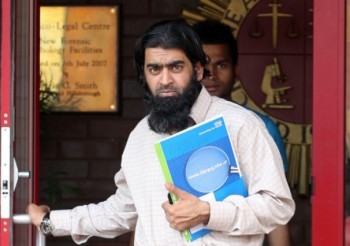
Over half of Flemands prefer their physician not to be Muslim: The survey firm GfK Significant found the number of Dutch-speaking who prefer not to be treated by a Muslim doctor to be 53 percent. (January 17, 2012)
Muslim husband jailed for punching nurse during childbirth: Already been expelled from the delivery room in Marseille for calling the midwife a "rapist" as she examined his wife's genitals, Nassim Mimoune, 24, saw the nurse removing his wife's burqa, so he smashed open the locked door and hit the nurse in the face, leading to his arrest for assault and being jailed for six months. The judge admonished him yesterday: "Your religious values are not superior to the laws of the [French] republic." The wife gave birth to a baby boy. (December 22, 2011
Muslim students boycott classes on evolution: Muslim students, including trainee doctors, at University College London refuse to attend lectures dealing with evolution, arguing that Darwinist theory conflicts with the Koran. Comment: One wonders if they also boycott the books and don't study for exams. (November 27, 2011)
Male Swedish doctor assaulted during childbirth: Rushing to the delivery room at Örebro University Hospital on November 6 to help acritically ill woman who had just given birth, a Swedish doctor was assaulted by her male relatives who objected to his being male. The husband screamed at the doctor and ordered him to leave the room at once; when the doctor refused and went to the patient to examine her, "He was attacked by the husband and received a kick to the groin," a local newspaper was told. In addition, the husband's brother attacked the doctor from behind.
Police took the relatives from the premises; the mother was removed for an operation; and the hospital reiterated its policy of staff not being selected for tasks according to gender. (November 19, 2010)
Search underway for a halal meningitis vaccine: Oddly, Indonesia is the one country where the porcine basis of meningitis vaccines is an issue. Despite efforts to find a halal seed, none yet has succeeded. Iskandar, president director of Bandung-based PT Bio Farma, a state-owned vaccine and serum producer, noted that "In Saudi Arabia, the vaccine did not spark a debate. In Malaysia, it is also no longer an issue." Ironically, pilgrims to Mecca must take the vaccine, per orders from the Saudi Arabia authorities. (August 9, 2010)
Advice for health care personnel: The Journal of Medical Ethics published an article by Aasim I. Padela, an emergency room physician at the University of Michigan, who discusses dilemmas that observant Muslim patients present. He argues that maintaining standards of modesty is the "overarching Islamic ethic" consideration. (November 1, 2010)
Islamist patient triumphant in Canada: In a small vignette that captures the essence of Islamist supremacism, Muslim parents of a new-born in Kingston General Hospital in Kingston, Ontario, unilaterally decided in November 2009 that the fathers of the other two infants could not be present while the Muslim mother breastfed her child, nor could they use the sink in the shared bathroom to clean their babies and themselves.
When one of the non-Muslim couples, John Kennedy and Brigitte Robinson, complained about this situation, especially as Kennedy was providing most of the care to baby Leah after Robinson's Caesarian and could not be forced out of the hospital room again and again, they were moved out to another room, a private one.
After leaving the hospital, the Kennedys got a bill for the upgraded room: C$750 for three nights' stay. They have refused to pay it. The hospital insists they must pay. The impasse continues. (August 1, 2010)
Burqas present problems for medical personnel: France's Europe1 channel explains in "Les médecins face à la burqa" (Doctors confronting the burqa) that patients wearing it makes it "impossible to verify the identity of the patient or her state of health." Further, it complicates matters during surgery or giving birth. (July 13, 2010)
British female Muslim doctors permitted disposable sleeves: The Department of Health guidelines require medical staff caring for patients to "bare below the elbows," thus insuring against contaminated sleeves while facilitating thorough hand washing. But some female Muslim staff consider the exposure of their forearms immodest and occasionally have refused to expose their arms, even for hand washing or pre-surgery "scrubbing in."
Working with the Muslim Spiritual Care Provision in the NHS as well as Islamic scholars, chaplains, multi-faith representatives, and infection control experts, the DoH has issued new guidelines that permit staff to wear disposable sleeves elasticated at the wrist and elbow. Further, Muslim staff can wear full length sleeves when not directly giving patient care, so long as it is not loose or dangling and can be pulled back for hand washing and direct patient care. (March 27, 2010)
Burqa banned in Bangladeshi hospital: Bangladesh has one of the world's largest Muslim populations and Islam serves as the state religion – but still, the Bangabandhu Medical University Hospital in Dhaka, the country's largest state-run hospital, has banned its staff from wearing burqas. The administration gave three reasons: (1) a rash of thefts of mobile phones and wallets; (2) unqualified "proxy workers" taking the place of legitimate personnel, giving the latter time off; and, (3) according to senior administrator Abdul Majid Bhuiyan, "burqa-clad women who travel to work on crowded public buses [and] then do not change into regulation uniform could carry diseases into the hospital." Female staff must wear standard uniforms that cover neither hair nor face while on duty.
Comment: Ironic, no, that burqas are banned in Bangladeshi wards but advancing in British ones? (March 22, 2010)
Islamists can cover arms, Christian banned from wearing crucifix: The Mail on Sunday has a long story by Jonathan Petre contrasting two developments, "NHS relax superbug safeguards for Muslim staff ... just days after Christian nurse is banned from wearing crucifix for health and safety reasons." It's quite a mix of Islamist supremacism and British dhimmitude.
Muslim doctors and nurses are to be allowed for religious reasons to opt out of strict NHS dress codes introduced to prevent the spread of deadly hospital superbugs. The Department of Health has announced that female Muslim staff will be permitted to cover their arms on hospital wards to preserve their modesty. This is despite earlier guidance that all staff should be 'bare below the elbow' after long sleeves were blamed for spreading bacteria, leading to superbug deaths. ...
The move contrasts with the case of nurse Shirley Chaplin, who last week lost her discrimination battle against Royal Devon and Exeter Hospital Trust, which said the cross she has worn since she was 16 was a 'hazard' because it could scratch patients. Mrs Chaplin, 55, had worn the silver cross on a necklace since her confirmation. But the employment tribunal told her that wearing a cross was not a 'mandatory requirement' of her faith. ... Last night she said of the sleeve concession to Muslims: 'I don't believe my cross is a danger so this is double standards. What can you say? It seems that life is stacked up against Christians these days.'
The former archbishop of Canterbury, Lord Carey, observed of these developments that "The Muslim voice is very strong, so politicians and others are scared of it. We can only deduce that the hostility aimed at her is because she is a Christian." (April 11, 2010)
Jihad? Go elsewhere: In a reversal of the usual pattern, an unnamed orthodontist in southern Germany refused to treat a 16-year-old boy named Jihad, taking offense at his name. But she changed her mind and said she regretted her action. "He can't help it if his parents named him so." (February 6, 2010)
Accident victims irate over paramedic assistance: A car flipped in Melton, Victoria, not far from Melbourne, injuring eight. Islamism reared its ugly head, as Anthony Dowsley relates: A private ambulance crew of two paramedics stopped to help with a road accident. One of them, Rian Holden,
said that he and his partner stopped to help Ambulance Victoria crews, who gladly accepted. Mr Holden said paramedics were struggling to attend to all the injured—with both a mother and her child in a critical condition. The private operator, who runs Event Medical Solutions, said he followed instructions of paramedics, helping move the child on to a spine board and administering first aid to others while his partner sat with an injured Muslim woman in traditional dress.
But Mr Holden said problems arose as he took the blood pressure and pulse rate of the injured woman. Ambulance Victoria operations manager Paul Holman had ordered him to leave. "It was in bad taste," Mr Holden said. "We copped a gob full of abuse. It makes you not want to do that in future. It's all because he has a problem with me. Everyone was helping and we rendered basic first aid." ...
Ambulance Victoria's Mr Holman said he was only short with the private operator because he had the welfare of patients on his mind. He said one of the injured men was becoming irate that Mr Holden was treating his wife—that created a culturally sensitive situation. "I don't know him [Mr Holden] at all," Mr Holman said. "These people are Muslim. I asked him to get out of the ambulance, thanked him and asked him to leave. "I was probably short because I had eight critically ill patients. I wasn't in the mood to have a long conversation. He was asked to leave politely. And I did get the police to make sure he left."
(September 22, 2009)
Muslim nurse in Netherlands fired for not wearing short sleeves: A Muslim woman, now 33 years old and working since 2001 as a nurse in the Den Bosch hospital, became increasingly engaged in her faith until in 2007 she started wearing long sleeves under her uniform. In April 2008, the hospital dismissed her on account of this insistence. The nurse lodged legal complaints. A judge has sided with the hospital that, for medical reasons, she needed to bare her arms but he did award €8,500 in compensation. (July 25, 2009)
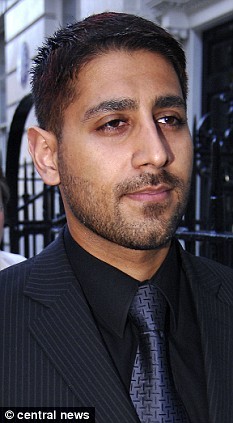 Omer Butt, a dentist in Bury, Lancashire, UK, made women under his care wear hijabs. |
sought to impose a dress code on patients attending his practice. ... If he had simply expressed a preference, without imposing any compulsion to adhere to this dress code, there may be no cause for complaint. However, he insisted - and those who did not comply were refused treatment. He made compliance with Islamic dress code a condition of treatment, which is entirely inappropriate under the auspices of the National Health Service. Patients should have access to NHS treatment regardless of their religious observance, or otherwise.
(May 7, 2009) July 2, 2009 update: The General Dental Council ruled yesterday that Butt's behavior demonstrated "professional immaturity" and will consider banning him from the profession. Chairwoman Gill Brown admonished him: "you regarded yourself as a Muslim first and a dentist second and it is clear that you were using your position as a dentist to seek to influence patients as to non-clinical issues." It came out in the course of the hearing that Butt kept a box of spare hijabs in his clinic. It also came out that one woman acceded to the hijab but rebelled when Butt asked her son if he prayed before deciding what treatment to give him. Butt proceeded to give the boy a composite filling rather than a silver one.
Dutch Muslims want sex-separated hospital rooms: As reported in BN DeStem, Muslim organizations in the Dutch town of Breda are demanding that men and women at Amphia Hospital not be roomed together. "Many Muslim women don't think it's nice based on religious conviction to have a half-naked man in the bed next to them," says a spokesman for the Immigrant Council and the Aarahman mosque. Sex-separate rooms were usual in Dutch hospitals until recently but coed rooms are now the rule. (April 23, 2009) Apr. 24, 2009 update:Raymond Ibrahim ties this demand to the Shari'a by quoting me, making a point I myself had not thought of:
"[R]ather than instill internalized ethical principles [such as notion of sexual responsibility], Islam establishes physical boundaries to keep the sexes apart and punishes transgressions harshly.... Resistance to Western influences has less to do with morality than with fears of unleashed forces that would destroy Islamicate society" (In the Path of God, 181).
Dutch Islamists refuse pain treatment: Recalling that the Koran says one must be alert before Allah, some Muslims are refusing palliative care, fearing that it would leave them drowsy on their death beds. Prof. Wouter Zuurmond of the Vrije Universiteit Medisch Centrum in Amsterdam has seen this pattern while working at the Kuria Hospice, which he manages. He finds the situation frustrating, knowing as he does that pain management need not make one drowsy. Accordingly, VUMC organized a symposium on March 29 about providing palliative care to Muslim patients. (March 31, 2009)
Amniotic fluid check to abort females: This update concerns Muslims in general, not specifically Islamists, for it concerns the deep cultural demand for mothers to produce sons. That demand takes on new forms when modern tests are available in the West. Consider the news from Sweden, where mothers are aborting healthy female fetuses:
In a recent case in Sweden a woman twice aborted her baby after finding out the fetus was a girl, reports Svenska Dagbladet. The woman, who had previously given birth to several daughters, asked for an amniotic fluid check, saying she was worried and wanted to establish the sex of the fetus. After finding out it was a girl, she aborted the pregnancy immediately. She soon afterward got pregnant again, and again aborted the fetus once she discovered it was a girl.
The case caused strong reactions from doctors and nurses who want to know whether they're obligated to reveal the sex of the fetus. A senior official in the industry says that there was no medical reason for the abortion, but that the nurse went ahead with the amniotic fluid check. "They've experienced having been forced into a corner and contributing to an abortion on the grounds that the fetus had the 'wrong' sex," the official says. Doctors and nurses are now demanding guidelines on how they should proceed with such cases.
In a previous case, a man was sentenced to a fine of 4,000 Swedish kroner for threatening to put a pistol to a doctor's head if she didn't tell him the fetus' sex, according to Svenska Dagbladet.
(February 22, 2009)
Muslima refuses to bare arms below elbow, loses job: An unnamed female Muslim therapeutic radiographer lost her job of six weeks at the Royal Berkshire Hospital in Reading for refusing to comply with the National Health Service's new "bare below the elbows" hygiene rules designed to combat superbugs. Prompted by concerns about patients catching superbugs (MRSA, Clostridium difficile) while in the hospital, the NHS introduced a new dress code for staff in January 2008 to avoid transmitting bacteria. All doctors and nurses in contact with patients must bare their arms below the elbow. The ban also extends to jewelry, watches, and false nails.
Claiming she was discriminated against and forced to choose between her religious beliefs and her livelihood, she refused to bare her arms and instead left her job. She describes her situation as having been a "continuous nightmare" and fears she may not be able to get another job. Still, she plans to campaign against the NHS policy because she wants to "prevent the policy from being universally applied, so other Muslim women do not experience the same trauma."
The Islamic Medical Association sympathizes with the woman. Its spokesman, Majid Katme, said that "Any practising Muslim woman should have the right to cover her arms, as long as her job doesn't jeopardise the care of the patient. What's the harm in somebody in her position covering their arms, as people in radiography have done for some time?" (September 1, 2008)
Muslim husband attacks male gynecologist: An unnamed husband attacked a gynecologist, David Benyaoun, as he was treating a complex birth at the Hôpital de l'Hôtel Dieu in Lyons, France. (August 4, 2008)
American Muslima medical student refuses male patients: Patrick Poole documents in "CAIR's Medical School Grievance Theater" how Iram Qureshi of Dublin, Ohio, dismissed from the West Virginia School of Osteopathic Medicine last month for her poor academic record, has turned to the Council on American-Islamic Relations and sued the school. Her attorney has raised allegations of religious discrimination, such as her reluctance to conduct chest and pelvic examinations on male subjects. (July 17, 2008)
French Muslim couple fined for refusing male doctor at childbirth: A French Muslim couple sued a hospital in Bourg-en-Bresse in eastern France for 100,000 after their son, Mohammed Ijjou, was born heavily handicapped on November 8, 1998, as a result of neurological complications during birth. Instead, the couple found itself fined 1,000 because the father, Radouane Ijjou, physically barred a male doctor from entering his wife's room for half an hour to carry out tests, citing religious reasons, after a midwife asked for help with the wife's labor. The court in Lyon found that "the child's condition is totally due to the attitude of Radouane Ijjou"; had the doctor been allowed in, the texts could have prevented the complications. Therefore, the hospital could not be held responsible. (June 11, 2008)
British female Muslim doctors "must remove veil": New guidelines issued yesterday by the UK's General Medical Council (in a document titled Personal Beliefs and Medical Practice) requires doctors to set aside personal and cultural preferences. Specfically, under the general guideline that religious clothing must not impede trust and communication with patients, female Muslim doctors must be prepared to remove their veil to treat patients effectively:
it is important that patients feel able to build relationships of trust and communicate freely with their doctors. Some patients, for example, may find that a face veil worn by their doctor presents an obstacle to effective communication and the development of trust. You must be prepared to respond to a patient's individual needs and take steps to anticipate and overcome any perceived barrier to communication. In some situations this may require you to set aside your personal and cultural preferences in order to provide effective patient care.
The Muslim Council of Britain endorsed the guidance, so long as it permits female doctors to wear a hijab, which does not cover the face. The chairman of the MCB's medical committee, Abdullah Shehu, explained: "While wearing a veil does not preclude someone from practising medicine, there is no harm in removing it where the ability to communicate or care for the patient is compromised. The Muslim community very much welcomes this guidance." (March 18, 2008)
British female Muslim medics refuse to battle superbugs: Crisis talks are underway with medical staff who object to hospital hygiene rules because of their understanding of Islamic modesty regulations. The new breed of superbugs, such as such as MRSA and Clostridium difficle, require medical personnel to roll up their sleeves when washing their hands and to remove arm coverings when in the operating room. But female medics in hospitals in at least three major English cities (Alder Hey children's hospital in Liverpool, Leicester University hospital, and Sheffield University hospital) have refused to follow the "bare below the elbows" dress code, on the grounds that this is immodest.
Some students have threatened to quit their course work rather than expose their arms. They won support from the Islamic Medical Association, which holds that women covering all their body in public, except for the face and hands, is a basic tenet of Islam. "No practising Muslim woman – doctor, medical student, nurse, or patient – should be forced to bare her arms below the elbow."
In contrast, the medical director at Alder Hey, Dr. Steve Ryan, emphasized that "We specify bare below elbows, no wrist watches, nail varnish or false nails in clinical areas. Good hand hygiene is one of the most important and simplest actions we can take to prevent healthcare associated infections.' He added that "A number of female Muslim students had approached the University of Liverpool to ask if we would provide facilities for them to change their outerwear and hijab for theatre scrubs. We were pleased to accommodate this request and these facilities have now been incorporated."
Dr. Charles Tannock, a Conservative MEP and former hospital consultant, took a tougher stand: "These students are being trained using taxpayers' money and they have a duty of care to their patients not to put their health at risk. Perhaps these women should not be choosing medicine as a career if they feel unable to abide by the guidelines everyone else has to follow." (February 27, 2008)
Belgian Muslimas may not refuse male doctors: Going in precisely in the opposite direction from their Dutch counterparts, the Belgian gynecological association has issued a code of conduct for patients that takes away their right to refuse a male doctor in emergency childbirths. Women coming in to give birth will have to sign the code to be serviced. Johan Van Wiemeersch, chairman of the association, warns that the police can be called in if the patient (or her husband) then reneges on the agreement. (February 2, 2008)
Dutch Muslimas may refuse male doctors: The Dutch physicians organization, Koninklijke Nederlandsche Maatschappij tot bevordering der Geneeskunst, has issued new guidelines, following an incident in an Amersfoort hospital when a pregnant Muslim woman refused treatment by a male gynecologist. The guidelines urge hospitals, except in emergency cases, to find ways to fulfill Islamist women's wishes. (December 18, 2007) Feb. 8, 2008 update: The KNMG requires patients who want to be treated by a doctor of one or other gender to state this when making an appointment, or else the preference is not operational. Also, this choice is limited to the sex of the doctor and cannot extend to skin color, political conviction, or religion.
Muslim husband ejects male anesthetist from the operating room: Hospital personnel are not the only Islamists in the wards. Here's a case of a patient's husband from Bree, Belgium: When a pregnant Muslim arrived late at night needing an emergency Caesarean, the hospital called Dr. Philippe Becx to serve as anesthetist.
However, her husband blocked the door and demanded a female anesthetist. The latter was unavailable. After a two-hour discussion proved fruitless, an imam was summoned. The imam permitted the doctor to apply an epidural injection, but only if the woman was fully covered with only a small area of skin showing. During the surgery itself, performed by a female gynecologist, the anesthetist was to remain in the hallway. Through a door that was slightly ajar, he shouted instructions to a nurse who was monitoring the anesthesia.
Despite all this, the Caesarean was succesful. (October 27, 2007)
British Muslim medical students reject kafir ways: In a report by Daniel Foggo and Abul Taher in the The Sunday Times (London), we learn that
Some Muslim medical students are refusing to attend lectures or answer exam questions on alcohol-related or sexually transmitted diseases because they claim it offends their religious beliefs. Some trainee doctors say learning to treat the diseases conflicts with their faith, which states that Muslims should not drink alcohol and rejects sexual promiscuity. A small number of Muslim medical students have even refused to treat patients of the opposite sex. One male student was prepared to fail his final exams rather than carry out a basic examination of a female patient.
The British Medical Association has received reports of Muslim students who did not want to learn anything about alcohol or the effects of overconsumption. "They are so opposed to the consumption of it they don't want to learn anything about it." (October 7, 2007)
Doctor urges Muslims to shun haram vaccines: Dr. Abdul Majid Katme, a psychiatrist who has worked in the National Health Service for 15 years and heads the Islamic Medical Association, wants British Muslims not to vaccinate their children against measles, mumps, rubella, MMR, diphtheria, tetanus, acellular pertussis, and meningitis. He argues, writes Abul Taher in London's Sunday Times, that these and almost all vaccines contain products derived from proscribed animal or human tissue, making them haram, or unlawful, for Muslims. "Many vaccines, especially those given to children, are full of haram substances — human parts, gelatine from pork, alcohol, animal/monkey parts, all coming from the West who do not have knowledge of halal or haram. It is forbidden in Islam to have any of these haram substances in our bodies."
Instead of relying on vaccines, Katme wants Muslims to let their children develop their own immune system naturally. Leading "Islamically healthy lives," he believes, is enough to ward off illnesses and diseases. "You see, God created us perfect and with a very strong defence system. If you breast-feed your child for two years — as the Koran says — and you eat Koranic food like olives and black seed, and you do ablution each time you pray, then you will have a strong defence system." (January 28, 2007)
The UK National Health Service should provide Muslims with faith-based services: So argues Aziz Sheikh, professor of primary care research and development at the University of Edinburgh (and an activist in the Muslim Council of Britain), calling for doctors of the same gender as their patients and helping patients "avoid porcine and alcohol derived drugs." (January 13, 2007)
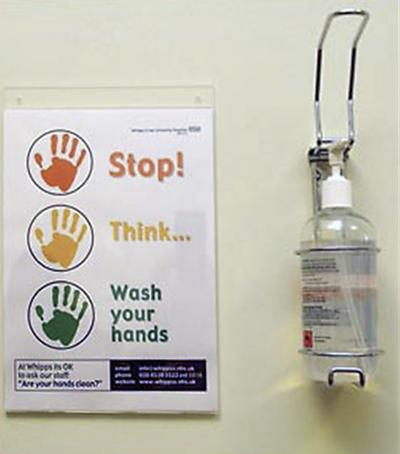 A typical anti-bacterial gel found in UK hospitals. |
I could not believe it - the signs are large enough and clear enough but they just took no notice and walked straight onto the ward. I was there almost every day for three weeks and I saw it repeated dozens and dozens of times. When I raised the matter with the nursing staff they just shrugged and said that Muslims were refusing to use the gel because it contained alcohol. They said they couldn't force visitors to use the gel and I understand that — but I was astonished that anyone who didn't wash their hands was allowed onto a ward. I know the dangers that bugs like MRSA can cause. They kill hundreds of patients a year.
Male refused treatment by female doctors: A 17-year-old male shepherd from Konya, Turkey, referred to only as "A.G.," arrived at the Konya Testing Hospital complaining of swollen testicles. He was sent to get ultrasound tests, but two headscarved (i.e., Islamist) female radiology doctors refused him service. Not receiving proper attention, A.G. later had one of his testicles removed by operation. The case has provoked much attention. The hospital's head of urology, Celal Tutuncu, portrayed the case as very "black and white," and said that action would be taken. Members of the opposition CHP party raised the case in parliament in December 2006. A CHP lawyer, Atilla Kart, noted that "This is the destruction wrought by religious references spilling over into public administration."
Male relatives preventing female patients from being treated by male doctors: So rampant is the problem in France of Muslim husbands preventing their wives and other female relatives from being treated by male doctors (for example, women in labor have not had epidurals because the anesthetist was a man) that Prime Minister Jean-Pierre Raffarin reportedly planned in February 2004 to propose legislation to stop this from happening (how he plans to do this is not explained). (December 29, 2006)
Hijabs during surgery: Sabrina Talukdar, 25, a medical student at the University of St Andrews, convinced the British Medical Association to permit sterile hijabs in the operating theater. She argued that this measure was necessary in order not to prevent some women from entering medical careers. "I think some in the medical profession get put off by this, and I can certainly see it stopping some from entering medicine." She also suggested that screens be put up so that Muslim women personnel can wash in private before preparing for an operation. "It is about making people feel more comfortable. Such straightforward innovations would do wonders for the morale of staff and students." (June 29, 2005)
"'Offensive' hospital bibles may be banned": The University of Leicester NHS Trust is considering the removal of Gideon Bibles from its wards at three hospitals, Leicester General Hospital, Leicester Royal Infirmary, and Glenfield Hospital. Nick Britten explains in the Daily Telegraph that the trust is concerned that the hospital's non-Christian patients might be offended by the presence of Bibles. Interestingly, Suleman Nagdi of Leicestershire's Federation of Muslim Organisations commented on the possible ban: "This is a Christian country and it would be sad to see the tradition end." And Resham Singh Sandu, the Sikh chairman of the local Council of Faiths, added: "I don't think many ethnic minority patients would object to the Bible in a locker." Comment: This case concerns not Islamists in the ward but what I like to call pre-emptive dhimmitude. (June 3, 2005) May 14, 2006 update: At least two hospitals in Australia, the Royal Brisbane and Women's and the Royal Melbourne, have stopped providing Bibles, in part because they could spread germs and are supposedly present a health hazard.


