
My weblog entry, "Calling Islamism the Enemy," documents the increasing readiness of Westerners to call the enemy by its name, but a contrary current, that of disassociating Islam from the problem, or pooh-poohing radical Islam as a threat, should not be ignored. For related quotes, focusing more on what Islam is or is not, see my weblog entry "Prominent Non-Muslims Decide What Islam Is and Is Not."
Here follow some prominent examples, in reverse chronological order:
Angela Merkel, chancellor of Germany: Islam is not the source of terrorism.
Meine Damen und Herren, es gibt als drittes eine große Bedrohung. Ich habe in Bezug auf den NATO-Einsatz in Afghanistan von der islamistischen terroristischen Bedrohung gesprochen, die in den folgenden Jahren durch IS und andere Organisationen wie Boko Haram beständig an Bedeutung gewonnen hat. Auf diese Bedrohung antwortet heute eine Anti-IS-Koalition, die aus meiner Sicht weit über die Mitgliedstaaten der NATO hinaus aktiv ist, natürlich im Irak und in Syrien. Deutschland beteiligt sich auch daran. Ich habe gerade mit dem türkischen Ministerpräsidenten gesprochen. Wir wissen, wie gerade auch die Türkei als NATO-Partner durch die Herausforderungen des islamistischen Terrorismus beeinträchtigt ist, durch Da'esh natürlich genauso wie durch den Terrorismus der PKK. Ich will hier ganz offen sagen: Allein die Europäer könnten mit dem Kampf gegen den islamistischen Terrorismus nicht fertig werden. Wir brauchen die militärische Kraft der Vereinigten Staaten von Amerika. Ich sage das deshalb, weil ja dieser islamistische Terrorismus auch sehr nah an den Außengrenzen der Europäischen Union agiert und daher auch Europa sehr stark beeinflusst. Auch deshalb ist die Kooperation mit den Vereinigten Staaten von Amerika natürlich sehr wichtig für uns.
Mir ist es aber auch genauso wichtig, dass wir islamische, muslimische Staaten mit in diese Koalition einbezogen haben. Ich glaube nämlich, gerade von diesen Staaten muss der Beitrag geleistet werden, klarzumachen, dass nicht "der Islam" die Ursache des Terrorismus ist, sondern ein fehlgeleiteter Islam. Deshalb erwarte ich mir – ich habe das an verschiedenen Stellen gesagt – auch von den religiösen Autoritäten des Islam klare Worte über die Abgrenzung zwischen friedfertigem Islam und dem Terrorismus im Namen des Islam. Dies können wir, die wir nicht Muslime sind, nicht so leisten, wie es die islamischen Autoritäten können.
Meine Damen und Herren, die Auswirkungen des Terrorismus sind vielfältig. Sie münden in Flucht und Vertreibung. Ich will hier hervorheben, was Länder um Syrien herum und zum Beispiel in der Nachbarschaft des Irak geleistet haben. Die Türkei hat nahezu drei Millionen Flüchtlinge aufgenommen. Jordanien und der Libanon sind bis an die Grenzen dessen gegangen, was machbar ist. Deshalb haben wir hierbei eine gemeinsame Verantwortung – ich will ausdrücklich sagen: auch die Europäische Union hat eine Verantwortung – für die Aufnahme von Flüchtlingen, für die Bekämpfung von Fluchtursachen und dafür, dass Menschen in Not vernünftig geholfen wird. Wir in Deutschland haben diese Verantwortung übernommen, zusammen mit einigen europäischen Mitgliedstaaten. Leider haben wir hierzu innerhalb der Europäischen Union keine gemeinsame Position. Aber wenn Sie sich einmal überlegen, dass Zypern auch ein Nachbarstaat von Syrien ist, dann sehen Sie, dass unsere Außengrenzen eben auch direkt an Syrien verlaufen. Daher können wir uns nicht sozusagen von der Frage abkoppeln, wie es denen geht, die vertrieben worden sind, die geflüchtet sind, sondern damit müssen wir uns beschäftigen.
Zum Kampf gegen den islamistischen Terrorismus will ich noch eine Bemerkung hinzufügen. Ich habe am Anfang gesagt, dass wir leider – das sage ich aus meiner Perspektive – in den letzten 25 Jahren noch kein stabiles und dauerhaft gutes Verhältnis zu Russland gefunden haben. Russland liegt aber auch in der Nachbarschaft der Europäischen Union. Russland liegt an unserer Außengrenze und ist für uns Nachbar. Deshalb werde ich nicht nachlassen, immer wieder dafür zu werben, dass wir mit Russland ein gutes Verhältnis hinbekommen – trotz unterschiedlicher Meinungen in vielen Fragen. Das heißt für mich, weiterhin zur NATO-Russland-Akte zu stehen, sie nicht aufzugeben, auch wenn die Zeiten schwierig sind – ich bedanke mich beim NATO-Generalsekretär dafür, der ja auch immer wieder Russland-NATO-Treffen durchgeführt hat –, und Gemeinsamkeiten im Kampf gegen den islamistischen Terrorismus zu suchen. Ich glaube, hierbei haben wir genau die gleichen Interessen und können hierbei auch zusammenarbeiten.
(February 18, 2017)
Homeland Security Advisory Council: This Countering Violent Extremism (CVE) Subcommittee of this group of non-USG employees headed by Farah Pandith, a Council on Foreign Relations fellow, has produced a modest-looking document, Interim Report and Recommendations, June 2016, that calls for not using Islamic terminology. Government agencies should "Reject religiously-charged terminology and problematic positioning by using plain meaning American English." It gives two examples:
a. US v THEM: For example, use "American Muslim" rather than "Muslim American"; "Muslim communities" rather than "Muslim world."
b. AMERICAN ENGLISH: For example, on using American English instead of religious, legal and cultural terms like "jihad," "sharia," "takfir" or "umma."
Mark Steyn deploys his trademark sarcasm in "The Week in 'Nothing to do with Islam'" to mock the many politicians who insist that "Terrorism is to do with everything except Islam." (November 21, 2015)
Hillary Clinton: David Martosko reports on the Democratic candidate for president's coming-out speech at the Council on Foreign Relations:
An acid-tongued Hillary Clinton ripped into conservatives on Thursday for what she said was an "obsession in some quarters" with the notion that the global spread of terrorism is a byproduct of the Muslim faith, denying that the two are connected in any way. "Islam itself is not our adversary ... Muslims are peaceful and tolerant people and have nothing whatsoever to do with terrorism."
Reading her speech at a brisk clip from a teleprompter, she slowed momentarily to mock three words – "radical Islamic terrorism" – that Republicans often accuse President Barack Obama of purposefully avoiding. Clinton instead referred repeatedly to "radical jihadism" as a global scourge, but didn't explain how the concept of jihadism is consistent with the notion that adherents of the world's second largest religion are uninvolved.
Blaming "radical Islamic terrorism" for vicious attacks of the sort that killed 129 people last Friday in Paris, she said, "is not just a distraction." Affiliating them with a religion, Clinton insisted, "gives these criminals, these murderers, more standing than they deserve and it actually plays into their hands by alienating partners we need by our side."
Comment: Very amusing that Clinton decries the term radical Islamic terrorism but endorses the more precise radical jihadism. Politics can be confusing. (November 19, 2015)
Hillary Clinton, Democratic Party presidential candidate, speaking at a debate in Iowa:
Moderator John Dickerson of CBS News: Secretary Clinton, you mentioned radical jihadists. Sen. Marco Rubio, also running for president, said this attack showed it's attack in Paris showed that we are at war with radical Islam. Do you agree with that characterization "radical Islam"?
Clinton: I don't think we're at war with Islam. I don't think we're at war with all Muslims. I think we're at war with jihadists
Moderator: Just to interrupt. he didn't say all Muslims. He said "radical Islam."
Clinton: I think you can talk about Islamists who clearly are also jihadists, but I think it's not particularly helpful to make the case that Senator Sanders was just making that I agree with that we've got to reach out to Muslim countries. We've got to have them be part of our coalition. If they hear people running for president who basically shortcut it to say we are somehow against Islam, that was one of the real contributions, despite all the other problems, that George W. Bush made after 9/11 when he basically said after going to a mosque in Washington, we are not at war with Islam or Muslims. We are at war with violent extremism. We are at war with people who use their religion for purposes of power and oppression. And, yes, we are at war with those people. But I don't want us to be painting with too broad a brush.
(November 14, 2015)
Jeh Johnson, secretary of Homeland Security, as recounted by Arutz Sheva:
Homeland Security chief Jeh Johnson announced the policy this past Friday at Aspen Institute's annual security forum in Washington, D.C. He explained that though it was a Muslim terrorist who shot to death four unarmed Marines in Tennessee two weeks ago, the government will call the attack, and other similar ones, "violent extremism" and not "Islamic terrorism" - out of respect for the Muslim community. Johnson said it is "critical" to refrain from the "Islamic" label in order to "build trust" among Muslims.
The Tennessee murderer, Mohammad Abdulazeez, is officially a "homegrown violent extremist," according to the government – even though he blogged about his Islamic religious motivations for the attack. He and his family also attended a local mosque controlled by a terror-tied Islamic trust. Johnson explained that if officials called Islamic terrorism "Islamic," they'd "get nowhere" in gaining the "cooperation" of the Muslim community.
The moderator of the panel tried to protest: "Isn't [the] government denying the fundamental religious component of this kind of extremism by not using the word Islamic?" "I could not disagree more," Johnson responded, and explained that Islam "is about peace."
(July 31, 2015)
Laurent Fabius, French foreign minister:
I do not like ... I do not want to be a censor, but I think the term Islamist - and I have also said this about the expression Islamic state - is probably not the right one to use. I call them terrorists. Because when you use the word Islam, you promote a kind of continuity between the Muslim (who practices his religion, which is a religion of peace) and a certain [extremist] interpretation of the Muslim religion.
Je n'aime pas... Je ne veux pas faire le censeur, mais je pense que l'expression islamiste – et j'en avais aussi fait la remarque dans l'expression Etat islamique – est probablement pas celle qu'il faut utiliser. J'appelle ça des terroristes. Parce dès lors que vous utilisez le mot islam, vous favorisez une espèce de vision de continuité entre le musulman, qui pratique sa religion qui est une religion de paix, et puis quelque chose qui serait une certaine interprétation de la religion musulmane.
Comment: Of many incoherent statements in this blog, Fabius' might win the prize. (January 9, 2015)
Federal Bureau of Investigation: The FBI's unclassified (but "law enforcement sensitive"), 60-page National Threat Assessment for Domestic Extremism, dated Aug. 14, tells about eight types of threats – anti-government militia groups, white supremacists, "sovereign citizen" nationalists, anarchists, animal rights and environmentalist extremists, black separatists, anti- and pro-abortion activists, and Puerto Rican nationalists – but somehow forgot about Islamists. Bill Gertz of the Washington Free Beacon notes:
One indirect explanation for the omission of Islamist extremism in the report is provided in a footnote to a graphic describing an "other" category of domestic extremism not included in the report. "The 'Other' category includes domestic extremist [sic] whose actions were motivated by beliefs which fall outside the eight designated [domestic terrorism] subprograms," the footnote stated. The footnote indicates the FBI has separated Islamist terrorism from other domestic extremism. ...
The graphic showed that domestic extremists killed 43 people from 2003 to 2013 carried out by five categories of terrorists—abortion extremists, black separatists, sovereign citizens, white supremacists, and "others." The report left out all references to the April 2013 bombing of the Boston Marathon, which killed three people and injured some 264 others. ... The FBI report also made no direct reference to the 2009 Fort Hood shooting, by radicalized Army Maj. Nidal Hasan. The mass shooting left 13 dead and more than 30 injured.
Gertz quotes former FBI Agent John Guandolo explaining the report did not include any reference to domestic-origin Islamist terror.
It should not surprise anyone who follows the jihadi threats in the United States that the FBI would not even include 'Islamic terrorism' in its assessment of serious threats to the republic in an official report. Since 9/11, FBI leadership—as well as leaders from Department of Homeland Security, the State Department, CIA, Pentagon, and the National Security Council—relies on easily identifiable jihadis from the Muslim Brotherhood/Hamas, al Qaeda and elsewhere to advise it on how to deal with 'domestic extremism.
Patrick Poole blames "politically correct" policies at the FBI for the problem.
At the same time we have senior members of the Obama administration openly saying that it's not a question of if but when we have a terror attack targeting the United States by ISIL, we have the FBI putting on blinders to make sure they don't see that threat. These politically correct policies have already allowed Americans to be killed at Fort Hood and in Boston.
Gertz notes what Rep. Louie Gohmert (Republican from Texas) said in a 2012 House floor speech about the FBI having been ordered to purge references to Islam, jihad, and Muslims in its counterterrorism "lexicon." (August 30, 2014)
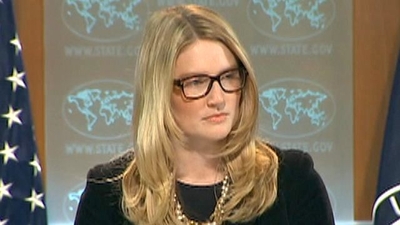
Marie Harf, deputy spokesperson, U.S. Department of State: The Islamic State in Iraq and Syria (ISIS) "don't represent any religion." ("Daily Press Briefing," August 21, 2014)
Marie Harf, U.S. Department of State.
Barack Obama, U.S. president: "ISIL speaks for no religion." ISIL stands for Islamic State of Iraq and the Levant, which is the same as Islamic State in Iraq and Syria. ("President Obama's remarks on the execution of journalist James Foley by Islamic State," August 20, 2014).
Hillary Rodham Clinton, former U.S. secretary of state:
The term Islamist generally refers to people and parties who support a guiding role for Islam in politics and government. It covers a wide spectrum, from those who think Islamic values should inform public policy decisions to those who think that all laws should be judged or even formulated by Islamic authorities to conform to Islamic law. Not all Islamists are alike. In some cases, Islamist leaders and organizations have been hostile to democracy, including some who have supported radical, extremist, and terrorist ideology and actions. But around the world, there are political parties with religious affiliations – Hindu, Christian, Jewish, Muslim – that respect the rules of democratic politics, and it is in America's interest to encourage all religiously based political parties and leaders to embrace inclusive democracy and reject violence. Any suggestion that faithful Muslims or people of any faith cannot thrive in a democracy is insulting, dangerous and wrong.
(Hard Choices: A Memoir, June 10, 2014)
David Cameron, British prime minister, responding to the daylight murder of a British soldier on a city street by an Islamist: "This was not just an attack on Britain – and on our British way of life. It was also a betrayal of Islam and of the Muslim communities who give so much to our country. There is nothing in Islam that justifies this truly dreadful act." (Quoted in Nigel Morris, "Murder of soldier in Woolwich was a 'betrayal of Islam' says Cameron as he insists Britain will stand resolute against terror," The Independent, May 23, 2013)
Federal Bureau of Investigation: The bureau's Counterterrorism Analysis Section today issued its 22-page 2011 National Terrorism Assessment: Domestic Terrorism and not once in it mentions Islam, Islamist, Muslim, jihad, or even Al-Qaeda. (September 10, 2012)
Jonnie Carson, the U.S. assistant secretary of state for African affairs, told a forum on U.S. policy toward Nigeria at the Center for Strategic and International Studies in Washington one day after a car bomb destroyed a Christian church in Kaduna, Nigeria, conducting Easter service, killing 39:
[I want to take this opportunity to stress one key point and that is that religion is not driving extremist violence either in Jos or northern Nigeria. While some seek to inflame Muslim-Christian tensions, Nigeria's ethnic and religious diversity, like our own in this country, is a source of strength, not weakness ... and there are many examples across Nigeria of communities working across religious lines to protect one another. ... Boko Haram's attacks on churches and mosques are particularly disturbing because they are intended to inflame religious tensions and upset the nation's social cohesion, although Boko Haram is reviled throughout Nigeria and offers no practical solutions to the country's problems.
Jonnie Carson, U.S. assistant secretary of state for African affairs.
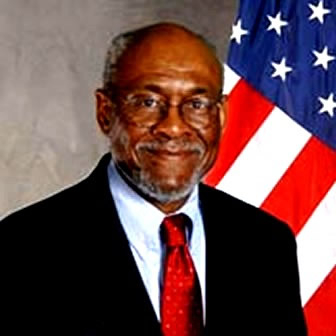
Carson bizarrely haracterized Boko Haram as "a larger organization focused primarily on discrediting the Nigerian government, and a smaller more dangerous group increasingly sophisticated and increasingly lethal." (April 10, 2012)
Paul Stockton, assistant secretary of defense, testifying before the House of Representatives, asked questions by Congressman Dan Lungren (Republican from California):
REP. LUNGREN: Secretary Stockton, are we at war with violent Islamist extremism?
Paul Stockton, assistant secretary of defense, evading Rep. Dan Lungren's questions about Islam.
MR. STOCKTON: No, sir. We are at war with al-Qaida, its affiliates –
REP. LUNGREN: OK, I understand that. My question is, is violent Islamist extremism at war with us?
MR. STOCKTON: No, sir. We are being attacked by al-Qaida and its allies.
REP. LUNGREN: Is al-Qaida — can it be described as being an exponent of violent Islamist extremism?
MR. STOCKTON: They — al-Qaida are murderers with an ideological agenda –
REP. LUNGREN: No, I — that's not my question. That wasn't my question. My question was, is al-Qaida acting out violent Islamist extremism?
MR. STOCKTON: Al-Qaida is a violent organization dedicated to overthrowing the values that we intend to advance –REP. LUNGREN: So is it yes or no?
MR. STOCKTON: Can I hear the question again? I'll make it as clear as I can. We are not at war with Islam. And it is not –
REP. LUNGREN: I didn't ask that — I did not ask that, sir. I asked whether we're at war with violent Islamist extremism. That's my question.
MR. STOCKTON: No, we're at war with al-Qaida and its affiliates.
REP. LUNGREN: Well, al-Qaida — how does al-Qaida define itself? Are they dedicated to violent Islamist extremism?
MR. STOCKTON: Al-Qaida would love to convince Muslims around the world that the United States is at war with Islam.
REP. LUNGREN: I didn't say that.
MR. STOCKTON: That's a prime propaganda tool.
REP. LUNGREN: Sir –
MR. STOCKTON: And I'm not going to aid and abet that effort to advance their propaganda goal.
REP. LUNGREN: No, no, my question is, is there a difference between Islam and violent Islamist extremism?
MR. STOCKTON: Sir, with great respect, I don't believe it's helpful to frame our adversary as Islamic with any set of qualifiers that we might add, because we are not at war with Islam.
REP. LUNGREN: I understand that. I never said we were at war with Islam. One of the questions we're trying to deal with is the radicalization of Islam, is the radicalization of Islamic youth. And if we can't distinguish between violent Islamist extremism and Islam, then all this stuff about behavioral indicators doesn't mean anything.
Let me — let me ask you this question. Is it a behavioral indicator to put on your card that you're a soldier of Allah?
MR. STOCKTON: A behavioral indicator that you have a copy of Inspire magazine on your desk –
REP. LUNGREN: That's not my question. That's not my question. My question is, is it a behavioral indicator to put on your card that you are a soldier of Allah, as Major Hasan did?
MR. STOCKTON: We have behavioral indicators now that enable our personnel, our supervisors, to focus on detecting indicators of violent extremism that reflect the lessons learned from Fort Hood.
REP. LUNGREN: OK, is that a lesson learned, that if you put a soldier of Allah on your card, that you've got to follow up and investigate that?
MR. STOCKTON: We are training our supervisors to follow up on appropriate indicators and exercise the leadership they need in order to provide for effective reporting and intervention.
REP. LUNGREN: You agree with the statement, as someone representing the Department of Defense, on the weekend after the shooting, that it would be a greater tragedy to lose our program of diversity than what had occurred?
MR. STOCKTON: Well, let me go back to something Secretary — Chairman King said. I was trained up by Senator Moynihan. There was nobody less politically correct than Senator Moynihan. I follow the truth wherever it takes me, and I strongly support the programs of the Department of Defense that focus on al-Qaida and behavioral indicators.
REP. LUNGREN: I appreciate it. I appreciate it.
MR. STOCKTON: This is not about political correctness. This is about defeating our adversary.
REP. LUNGREN: Well, sir, I would disagree with you that it may not be about political correctness. We are here talking about the fact that we now have to have behavioral indicators. I agree with that. But my question is, if someone gives inflammatory remarks, as did Major Hasan, in an open setting, if he has on his card that he was a soldier of Allah, it seems to me to be beyond common sense to think those are not behavioral indicators.
So my question is, if I'm a member of the military today and I see those two events or those two circumstances, would it be appropriate for me to report those as behavioral indicators? Now, that's not a question of whether or not you're being political (sic) correct, sir. I'm asking you to answer that specific question. If I'm a soldier and asked you that question, what do you tell me?
MR. STOCKTON: Inflammatory rhetoric of the sort associated with Major Hasan — that needs to be reported, and our officers are trained up now to report on that behavior.
REP. LUNGREN: I thank you, and I appreciate that.
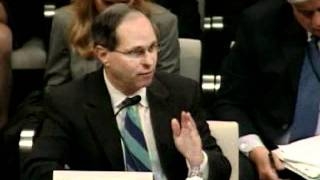
(Video at YouTube, transcript by Time, December 7, 2011)
Barack Obama, U.S. president: "All around the world there are enormously courageous journalists and bloggers who, at great risk to themselves, are trying to shine a light on the critical issues that the people of their country face; who are the frontlines against tyranny and oppression. And obviously the loss of Daniel Pearl was one of those moments that captured the world's imagination because it reminded us of how valuable a free press is, and it reminded us that there are those who would go to any length in order to silence journalists around the world." ("Remarks by the President at the Signing of the Freedom of the Press Act," May 17, 2010)
Eric Holder, attorney general of the United States: In an acutely uncomfortable exchange with Lamar Smith (Republican of Texas), Holder avoided blaming Islamic motives for recent terrorist episodes. The exchange can be viewed on video. Here is an excerpt of the complete exchange:
Smith: Let me go to my next question, which is, in - in the case of all three attempts in the last year, the terrorist attempts, one of which was successful, those individuals have had ties to radical Islam. Do you feel that these individuals might have been incited to take the actions that they did because of radical Islam?
U.S. Attorney General Eric Holder, not wanting to blame anything on radical Islam.
Holder: Because of?
Smith: Radical Islam.
Holder: There are a variety of reasons why I think people have taken these actions. It's one, I think you have to look at each individual case. I mean, we are in the process now of talking to Mr. Shahzad to try to understand what it is that drove him to take the action.
Smith: Yes, but radical Islam could have been one of the reasons?
Holder: There are a variety of reasons why people...
Smith: But was radical Islam one of them?
Holder: There are a variety of reasons why people do things. Some of them are potentially religious...
Smith: OK. But all I'm asking is if you think among those variety of reasons radical Islam might have been one of the reasons that the individuals took the steps that they did.
Holder: You see, you say radical Islam. I mean, I think those people who espouse a - a version of Islam that is not...
Smith: Are you uncomfortable attributing any other actions to radical Islam? It sounds like it.
Holder: No, I don't want to say anything negative about a religion that is not...
Smith: No, no. I'm not talking about religion. I'm talking about radical Islam. I'm not talking about the general religion.
Holder: Right. And I'm saying that a person, like Anwar Awlaki, for instance, who has a version of Islam that is not consistent with the teachings of it...
Smith: But...
Holder: ... and who espouses a radical version...
Smith: But then is - could radical Islam had motivated these individuals to take the steps that they did?
Holder: I certainly think that it's possible that people who espouse a radical version of Islam have had an ability to have an impact on people like Mr. Shahzad.
Smith: OK. And could it have been the case in one of these three instances?
Holder: Could that have been the case?
Smith: Yes, could—again, could one of these three individuals have been incited by radical Islam? Apparently, you feel that that they could've been.
Holder: Well, I think potentially incited by people who have a view of Islam that is inconsistent with...
Smith: OK. Mr. A.G., it's hard to get an answer yes or no, but let me go on to my next question.
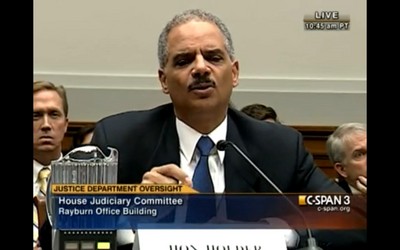
(House Committee on the Judiciary, Hearing on the Justice Department, May 13, 2010)
John Brennan, assistant to the U.S. president for homeland security and counterterrorism, asked about the Islamist jihadi leader Anwar al-Awlaki: "Mr. al-Awlaki has been able to, through his sermons on the Internet, and his rhetoric, to have this appeal to this group of individuals who have unfortunately been attracted to this very distorted and perverse Islamic message that is anything but Islamic. It is just a murderous agenda." ("Transcript of John Brennan on CNN," May 9, 2010)
Mitt Romney, former Republican candidate for president: In a speech on national security, he referred four times to "jihadism" and also to "mullahs" and "ayatollahs," but not once to Islam. Asked about this discrepancy, Romney replied:
I didn't refer to Islam at all, or to any other religion for that matter. I spoke about three major threats America faces on a long term basis. Jihadism is one of them, and that is not Islam. If you want my views on Islam, it's quite straightforward. Islam is one of the world's great religions and the great majority of people in Islam want peace for themselves and peace with their maker. They want to raise families and have a bright future.
There is, however, a movement in the world known as jihadism. They call themselves jihadists and I use the same term. And this jihadist movement is intent on causing the collapse of moderate Muslim states and the assassination of moderate Muslim leaders. It is also intent on causing collapse of other nations in the world. It's by no means a branch of Islam. It is instead an entirely different entity. In no way do I suggest it is a part of Islam.
(Dan Gilgoff, "Mitt Romney: Jihadism Is Not Part of Islam," June 3, 2009)
Obama Administration: There appears to be a new name for the global war on terror.
Peter Orszag, director of the Office of Management and Budget (an the executive-branch agency that vets public testimony of administration officials in advance), discussing Obama's budget proposal at a news conference on Feb. 26: "The budget shows the combined cost of operations in Iraq, Afghanistan and any other overseas contingency operations that may be necessary."
Craig W. Duehring, assistant secretary of the Air Force for manpower, said last week, "Key battlefield monetary incentives has allowed the Air Force to meet the demands of overseas contingency operations even as requirements continue to grow."
This new name, "Overseas Contingency Operation" appears to have become official with a memo e-mailed from the Defense Department's office of security review stating that "this administration prefers to avoid using the term 'Long War' or 'Global War on Terror' [GWOT.] Please use 'Overseas Contingency Operation'." The memo attributed this change to OMB. But OMB spokesman Kenneth Baer denies the change: "There was no memo, no guidance. This is the opinion of a career civil servant." (Scott Wilson and Al Kamen, "'Global War On Terror' Is Given New Name," The Washington Post, March 25, 2009)
Janet Napolitano, the just-appointed secretary of Homeland Security, in an interview:
Spiegel: Madame Secretary, in your first testimony to the US Congress as Homeland Security Secretary you never mentioned the word "terrorism." Does Islamist terrorism suddenly no longer pose a threat to your country?
Napolitano: Of course it does. I presume there is always a threat from terrorism. In my speech, although I did not use the word "terrorism," I referred to "man-caused" disasters. That is perhaps only a nuance, but it demonstrates that we want to move away from the politics of fear toward a policy of being prepared for all risks that can occur.
("Interview with Homeland Security Secretary Janet Napolitano," Der Spiegel, March 16, 2009)
Barack Obama, U.S. president: Asked in an interview about his using the term war on terror only once, he replied:
I think it is very important for us to recognize that we have a battle or a war against some terrorist organizations. But that those organizations aren't representative of a broader Arab community, Muslim community. .I think we have to—you know, words matter in this situation because one of the ways we're going to win this struggle is through the battle of hearts and minds.
Asked, "So that's not a term you're going to be using much in the future?" Obama replied:
You know, what I want to do is make sure that I'm constantly talking about al Qaeda and other affiliated organizations because we, I believe, can win over moderate Muslims to recognize that that kind of destruction and nihilism ultimately leads to a dead end, and that we should be working together to make sure that everybody has got a better life.
(Anderson Cooper, "360 Degrees," Cable News Network, February 3, 2009)
Parker Griffith, a Democratic state senator running for Congress from the 5th District of Alabama, told the Colbert-Lauderdale Baptist Association in September: "We have nothing to fear from radical Islam." When called on this statement by Wayne Parker, his Republican opponent, Griffith compounded his error with the following explanation: "I don't think anyone in the room misunderstood what I was saying. I was in a room full of Baptist ministers, and we were talking about religion, not matters of national security. The point I was making was that if we are strong in our Christian beliefs, that is stronger than any Islamic threat." (October 25, 2008)
UK Home Office: Home Secretary Jacqui Smith announced "£12.5m allocated to prevent extremism," with nary a word about the nature of the extremism. Here's an excerpt from the press release:
The new funding and information will help local authorities, schools, community groups and police tackle violent extremism. The funds will be targeted at institutions working to counter terrorism, and at those most vulnerable to radicalisation. Part of the government's 'Prevent' strategy, the funds are designed to prevent the spread of extremism.
New guidelines released with the funding (new window) offer advice on how agencies and organisations can work to prevent the spread of radicalisation, support mainstream voices and help communities resist violent extremists.
The new approach will include:
- extending police-led multi-agency projects to identify and support people at risk of being targeted by violent extremists.
- working closely with young people whose criminal backgrounds have left them open to extremist views
- working in prisons to tackle identify and stop the spread of radicalisation there
- getting more involved with grassroots projects designed to help communities dealing with extremist residents
(June 3, 2008)
U.S. Department of State: The State Department has approved the NCTC memo described below for diplomatic use; a version of it will be distributed to all U.S. embassies. The NCTC memo, the Associated Press notes, has apparently had an impact, at least at the top level of the State Department. "Secretary of State Condoleezza Rice, who once frequently referred to 'jihad' in her public remarks, does not appear to have used the word, except when talking about the name of a specific terrorist group, since last September." (April 24, 2008)
U.S. National Counter Terrorism Center: A non-binding "official use only" memorandum prepared by the "Extremist Messaging Branch" at the National Counter Terrorism Center draws on the DHS study noted below. NCTC's "Words that Work and Words that Don't: A Guide for Counterterrorism Communication" offers advice not for policy papers, research analysis, and scholarly writing but for conversations with the public. Some excerpts, retaining the original spelling and punctuation:
Don't Invoke Islam: Although the al-Qaida network exploits religious sentiments and tries to use religion to justify its actions, we should treat it as an illegitimate political organization, both terrorist and criminal.
Don't Harp on Muslim Identity: Avoid labeling everything 'Muslim.' It reinforces the "U.S. vs. Islam" framework that Al-Qaeda promotes. Be specific (Egyptian, Pakistani) and descriptive (South Asian youth, Arab opinion leaders), where possible.
Avoid Ill-Defined and Offensive Terminology: We are communicating with, not confronting, our audiences. Don't insult or confuse them with pejorative terms such as 'Islamo-fascism,' which are considered offensive by many Muslims. ...
Use the terms 'violent extremist' or 'terrorist.' Both are widely understood terms that define our enemies appropriately and simultaneously deny them any level of legitimacy.
Use simply al-Qaida, al-Qaida network, or al-Qaida and Associated Networks (AQAN). We suggest you avoid the term 'al-Qaida movement,' which implies a degree of political legitimacy (e.g., 'labor movement,' 'civil rights movement,' 'women's movement,'. ..). There is no legitimacy to al-Qaida's activities. ...
Avoid the term 'caliphate,' which has positive connotations for Muslims, to describe the goal of al-Qaida and associated groups. The best description of what they really want to create is a 'global totalitarian state.'
Never use the terms 'jihadist' or 'mujahideen' in conversation to describe the terrorists. A mujahed, a holy warrior, is a positive characterization in the context of a just war. In Arabic, jihad means "striving in the path of God" and is used in many contexts beyond warfare. Calling our enemies jihadis and their movement a global jihad unintentionally legitimizes their actions.
(March 14, 2008)
U.S. Department of Homeland Security: The DHS Office for Civil Rights and Civil Liberties argues that "The language that senior government officials use can help to rally Americans to vigilance" but it does just the opposite by discouraging vocabulary about Islam and jihad. Titled "Terminology to Define the Terrorists: Recommendations from American Muslims," the 3,600-word study draws on "a broad range of Muslim American community leaders and scholars" to offer a "strategic terminology." The bulk of it gives advice, in the form of nine "expert recommendations," about words to avoid and to use.
The last line sums up the report's logic, which is to de-emphasize the Muslim-Western aspect in favor of a more general one: "The USG should draw the conflict lines not between Islam and the West; but between a dangerous. cult-like network of terrorists and everyone who is in support of global security and progress." In this spirit, the DHS report discourages the term "moderate Muslim." It counsels "caution in using terms such as, 'jihadist,' 'Islamic terrorist,' 'Islamist,' and 'holy warrior' as grandiose descriptions." Particularly interesting is the reasoning behind the reluctance to use Islamist and Islamism:
The experts we consulted did not criticize this usage based on accuracy; indeed, they acknowledged that academics and commentators, including some in the Arab and Muslim Worlds, regularly use "Islamist" to describe people and movements. Nevertheless, they caution that it may not be strategic for USG officials to use the term because the general public, including overseas audiences, may not appreciate the academic distinction between Islamism and Islam. In the experts' estimation, this may still be true: albeit to a lesser extent, even if government officials add qualifiers, e.g. "violent Islamists" or "radical Islamism."
In place of these words, the report urges use of "death cult," "cult-like," "sectarian cult," and "violent cultists," pointing out explicitly that because "there is no overt reference to Islam; these terms are not as likely to cause offense" to Muslims. Perhaps most astonishing is the idea of renaming the war on terror as "A Global Struggle for Security and Progress."
Comment: This "expert" advice, it bears noting, exactly echoes the wish-list of Islamist organizations. It also tracks the thinking of Jim Guirard of the TrueSpeak Institute ("devoted to truth-in-language and truth-in-history in public discourse"), who argues for the need not to speak of jihad but hiraba, and like terms. It sounds reasonable – until one thinks it through critically, as Robert Spencer definitively does at "Is Al-Qaeda terrorism "jihad martyrdom" or "irhabi" lawlessness?" (January 2008) May 2, 2008 update: The Investigative Project on Terrorism has asked who the Muslims are behind the report but DHS is not replying:
The Department of Homeland Security (DHS) is refusing to identify the "influential Muslim Americans" and "leading U.S.-based scholars and commentators on Islam" who met with Secretary Michael Chertoff in helping shape a softer approach to government lexicon about terrorists and their ideological motivations. "Our policy is we don't comment on the Secretary's private schedule," spokeswoman Amy Kudwa told the IPT. Nor would she identify any of the participants' organizational affiliation.
George W. Bush, president of the United States: He did not actively deny the Islamist nature in his final State of the Union speech last night, but he did avoid it, notes Andrew Cochran at "So Now President Bush Won't Call It 'Islamic' Terrorism or Extremism?" The contrast with his speeches in prior years is telling. (January 29, 2008)
Jacqui Smith, UK home secretary: In her first major speech on radicalization, Smith repeatedly used the phrase "anti-Islamic" to describe terrorism. One example: "As so many Muslims in the UK and across the world have pointed out, there is nothing Islamic about the wish to terrorise, nothing Islamic about plotting murder, pain and grief. Indeed, if anything, these actions are anti-Islamic." She expressed her intent to enlist the Muslim community to fight against this "anti-Islamic activity." In addition, senior government sources indicated that the terms war on terror and Islamic extremism will no longer be used by top officials. (James Slack, "Government renames Islamic terrorism as 'anti-Islamic activity' to woo Muslims," Daily Mail, January 17, 2008)
Gordon Brown, prime minister of the United Kingdom: According to an article, he "has banned ministers from using the word 'Muslim' in connection with the terrorism crisis. The Prime Minister has also instructed his team ... that the phrase 'war on terror' is to be dropped. The shake-up is part of a fresh attempt to improve community relations and avoid offending Muslims, adopting a more 'consensual' tone than existed under Tony Blair." (Macer Hall, "Brown: Don't Say Terrorists Are Muslims," Daily Express, July 3, 2007) Feb. 4, 2008 update: The prime minister's ban has now been codified in a new counter-terrorism phrasebook drawn up by the Home Office, reports Alan Travis in the Guardian.
Reflecting the government's decision to abandon the "aggressive rhetoric" of the so-called war on terror, the guide tells civil servants not to use terms such as Islamist extremism or jihadi-fundamentalist but instead to refer to violent extremism and criminal murderers or thugs to avoid any implication that there is an explicit link between Islam and terrorism. It warns those engaged in counter-terrorist work that talk of a struggle for values or a battle of ideas is often heard as a "confrontation/clash between civilisations/cultures". Instead it suggests that talking about the idea of shared values works much more effectively. ...
"This is not intended as a definitive list of what not to say but rather to highlight terms which risk being misunderstood and therefore prevent the effective reception of the message," says the Home Office paper. "This is not about political correctness, but effectiveness - evidence shows that people stop listening if they think you are attacking them."
Jane Harman (Democrat of California), chairwoman of the U.S. House Subcommittee on Intelligence, Information Sharing, and Terrorism Risk Assessment, addressing a hearing on "Assessing and Addressing the Threat: Defining the Role of a National Commission on the Prevention of Violent Radicalization and Homegrown Terrorism": "while it is important for the committee to address the issue of radicalization, we are not talking about one particular ethnic, political or religious group." (Muslim Public Affairs Council, "MPAC Executive Director Testifies Before US House Committee on Homeland Security," June 14, 2007).
The European Union: "Brussels officials have confirmed the existence of a classified handbook which offers "non-offensive" phrases to use when announcing anti-terrorist operations or dealing with terrorist attacks. Banned terms are said to include 'jihad,' 'Islamic' or 'fundamentalist.' The word 'jihad' is to be avoided altogether, according to some sources, because for Muslims the word can mean a personal struggle to live a moral life. One alternative, suggested publicly last year, is for the term 'Islamic terrorism' to be replaced by 'terrorists who abusively invoke Islam'." (Bruno Waterfield, "Don't confuse terrorism with Islam, says EU," The Daily Telegraph, March 31, 2007)
Michael ChertoffMichael Chertoff, secretary of the Department of Homeland Security.
, secretary of the Department of Homeland Security: According to WorldNetDaily.com, DHS staff
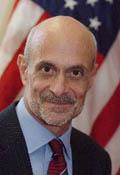
complain their boss Michael Chertoff is hamstringing counter-terror operations with pro-Islamic political correctness. They say headquarters has cautioned officials not to describe Islamic terrorism as Islamic and to respect Islam as a "religion of peace." "It's constantly drilled into us that Islam is not the enemy, and that the terrorists are merely a minority of 'extremists' distorting Islam," said one official who wished to go unnamed. DHS Secretary Chertoff set the tone in a staffwide memo last year, when he described as "extremists" the two dozen Muslim terrorists who plotted to blow up 10 airliners over the Atlantic. Unlike British authorities, Chertoff did not mention the religious motivation of the terrorists. Nowhere in the one-page memo were the terms "Muslim" or "Islamic" used.
("Chertoff's 'Islam PC' rankles fed officials," February 10, 2007)
British Foreign Office: Not only is the British bureaucracy loath to mention radical Islam, but it has now formally distanced itself from the anodyne and inaccurate "war on terror," on the grounds that even this is inflammatory vis-à-vis British and other Muslims. A Foreign Office spokesman said dropping the term avoids "reinforcing and giving succour to the terrorists' narrative by using language that, taken out of context, could be counter-productive." Instead, British diplomats and official spokespeople will "emphasise upholding shared values as a means to counter terrorists." The move met with approval from Garry Hindle, a terrorism expert at the Royal United Services Institute in London, who noted that "Military terminology is completely counter-productive, merely contributing to isolating communities" and called this change in terminology "a very positive move." (December 10, 2006)
Anne-Marie Slaughter, dean of Princeton's Woodrow Wilson School: "When you talk about fighting terrorism, you shouldn't talk about Islamo-anything, because ... 'The minute you say Islam [is] connected to terrorism, you are deepening that division'." (Anne-Marie Slaughter, "U.S. National Security on the 21st Century" October 3, 2006)
Karen Hughes at the Islamic Society of North America.
Karen Hughes, U.S. undersecretary of state: "It's difficult to know what to call the ideology that we're up against, because it is a perversion of Islam. I use 'violent extremist,' because I think they are extremists, they are violent, they are actually mass murderers who pervert their religion." (Quoted in Anne Gearan, "Hughes: Fixing U.S. Image May Take Years." The Associated Press, September 28, 2006.)
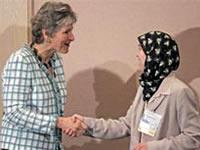
Comment: Despite the impressive leadership of the president in calling Islamism the enemy (documented at length in another weblog entry by that name), State Department types cannot find the backbone to mention the word Islam.
European Union officials, in the process of working on something they call a "non-emotive lexicon for discussing radicalisation" for use by EU officials and politicians when talking in public about terrorism and Islam, are establishing that nothing in Islam justifies the terrorist atrocities on September 11 or in Madrid or London. "Certainly 'Islamic terrorism' is something we will not use ... we talk about 'terrorists who abusively invoke Islam'," an EU official told Reuters. The same official noted that "Jihad is a perfectly positive concept of trying to fight evil within yourself." And EU counter-terrorism chief Gijs de Vries says that terrorism is not inherent to any religion, and he encourages "a choice of language that makes clear that we are talking about a murderous fringe that is abusing a religion and does not represent it." A EU official familiar with the "lexicon" review says
the point of using careful language was not to "fall into the trap" of offending and alienating citizens. "You don't want to use terminology which would aggravate the problem," he said. "This is an attempt ... to be aware of the sensitivities implied by the use of certain language."
(David Rennie, "'Islamic terrorism' is too emotive a phrase, says EU," Daily Telegraph, April 12, 2006)
Comment: As so often in this war, sensitivity to feelings trumps the common security and even the effort to win the war.
The Pentagon has renamed what for nearly five years was called the "war on terror" the "long war." The term has not caught on – no surprise there – so the Department of Defense has been trying anew in recent days to get it accepted. ("Pentagon promotes 'long war' strategy as violence threatens withdrawal," Daily Telegraph, February 25, 2006)
Ray Takeyh and Nikolas K. Gvosdev: "while radical Islam may prove tantalizing to a disillusioned few, it is a fading ideology with a limited and diminishing constituency." ("Radical Islam: The Death of an Ideology?" Middle East Policy, Winter 2004, p. 86)
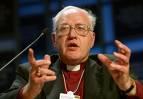
Lord Carey, the former Archbishop of Canterbury.
Lord Carey, former Archbishop of Canterbury: He has undertaken a personal campaign "to challenge anyone who talks about Islamic terrorists. I think we have to drop the word Islamic because in so doing we deprive the terrorist of his religious legitimacy. He wants religious justification for his evil deeds, and we shouldn't give it to him. And second, by dropping Islamic before terrorist we are taking a lot of pressure off the average Muslim who simply doesn't want to be portrayed as a fellow murderer. ... We're blaming that tiny, tiny minority of people who are using Islam as a weapon to get their own back against the West and to undermine all we're trying to do." (BBC Radio 4's "Today", September 29, 2004)
Colin Powell, U.S. secretary of state: the 9/11 atrocities "should not be seen as something done by Arabs or Islamics; it is something that was done by terrorists." (Speaking on September 12, 2001)


