
Several points were too bulky to fit into the main body of my column today, "Fin de Régime in Syria?" so I include them here:
(1) My title intentionally echoes one in Foreign Policy magazine from Summer 1980, "Dateline Syria: Fin de Régime?" Yes, I know: Stanley F. Reed III jumped the gun by (at least) 31 years but that does not deter me from repeating his quasi-prediction of the Assad demise.
(2) Contradictory Iranian and Turkish advice to Assad foreshadows the larger differences ahead between the two Islamist powers. Whereas the Iranians counseled Assad violently to repress the protesters and actually helped him do so, Recep Tayyip Erdoğan advised Assad that "responding to the people's years-old demands positively, with a reformist approach, would help Syria overcome the problems more easily." He even got into details: one newspaper report indicates he told the Syrians "to increase the effectiveness of public services, ensure a more transparent economy and public tendering process and restrain the security forces." (Those are not exactly the priorities I would stress.) Contradictory Iranian and Turkish tactics point to looming tensions between the Islamist 1.0 and 2.0 regimes.
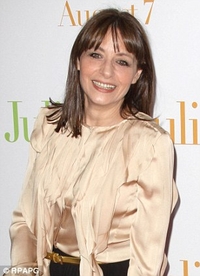 Joan Juliet Buck, Vogue's distinguished author. |
(4) Vogue magazine is unrepentant, even defiant, about "Asma al-Assad: A Rose in the Desert," its wretched story on Bashar al-Assad's wife by Joan Juliet Buck. In an interview, Vogue senior editor Chris Knutsen justified the glamorization of tyranny, explaining,
We thought we could open up that very closed world a very little bit. ... The piece was not meant in any way to be a referendum on the al-Assad regime. It was a profile of the first lady. ... For our readers it's a way of opening a window into this world a little bit.
 Rana Kabbani, Syrian-born wife of Patrick Seale, Syrian apologist. |
The entrenched and Assad regime is viewed by so many Syrians as an internal colonialism that, much like the external colonialism of the past, has robbed them and bombed them and impeded them from joining the free peoples of the world.
(6) For background to the civil insurrection that began in March 2011, see the important article of September 3, 2010, about the Bashar al-Assad's regime anti-Islamist campign by Kareem Fahim, "Syria's Solidarity With Islamists Ends at Home." One excerpt:
The campaign carries risks for a secular government that has fought repeated, violent battles with Islamists in the past, most notably in 1982, when Mr. Assad's father, Hafez al-Assad, razed the city of Hama while confronting the Muslim Brotherhood, killing tens of thousands of people. For the moment there has been no visible domestic backlash, but one cleric, who said he was dismissed without being given a reason two years ago, suggested that could change. "The Islamists now have a strong argument that the regime is antagonizing the Muslims," he said.
(May 24, 2011)
Apr. 26, 2012 update: Joan Juliet Buck, the author of the Vogue article, "Asma al-Assad: A Rose in the Desert" now informs us that "It is horrifying to have been near people like that" and implies that the Assad children she saw did not appear in Vogue, presumably for security purposes. Comment: So, Buck is either a mercenary or a liar – not a pleasant choice.
Apr. 26, 2014 update: At some point in the past year, Vogue finally got embarrassed by its despicable "Rose in the Desert" article. But, rather than do the honorable thing and acknowledge its error, it quietly caused it to disappear from the website.
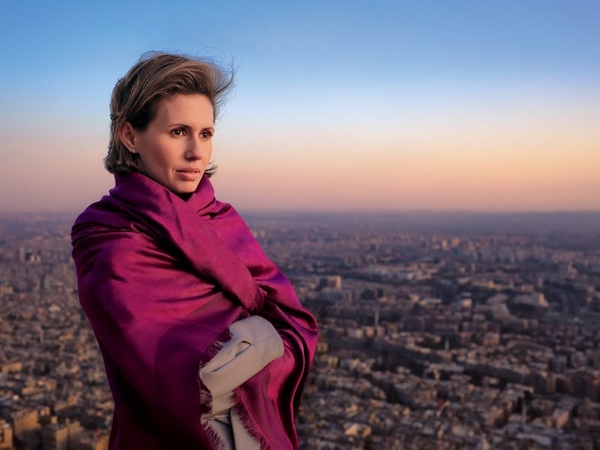 The glamor picture introducing Vogue's story on Asma, the "rose in the desert." |
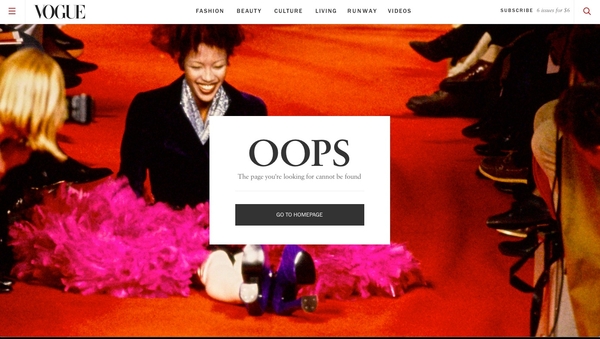 What one now finds at http://www.vogue.com/vogue-daily/article/asma-al-assad-a-rose-in-the-desert/ |


