
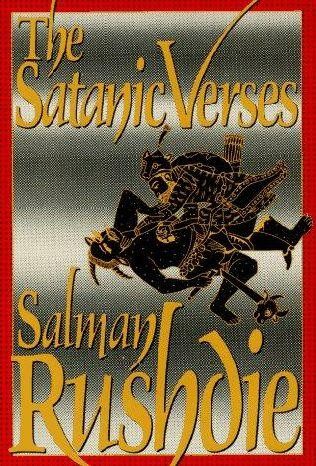
 "The Satanic Verses" has had a major non-literary legacy. |
To many, the event was quirky and unique, the product of an old man's extremist mentality; few imagined the edict would permanently alter Rushdie's life, much less that it would alter Muslim-Western relations more generally. As Rushdie himself explained last month: "There was a tendency from everybody to believe that it was an isolated incident rather than an indicator of something wider, to believe that it was all my fault."
In retrospect, however, one can see the deep importance of the edict. It strengthened the hand of radical Islam, encouraged Muslims to impose their will on the West, and inspired Muslims in the West to assert themselves. The Rushdie affair was, in short, one of the influential events of the age.
Also, this note offers a chance to report on two facts I had not known before:
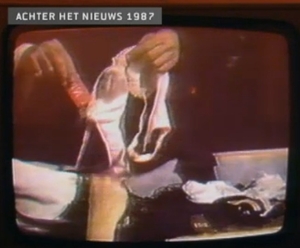 Screen grab from the Carrell clip of 1987 pretending to show Khomeini accepting admirers' brassieres. |
(2) The Raza Academy of Bombay, a Barelvi institution, claims that "In 1988 the first fatwa against the ill famed Salman Rushdie was issued by Raza Academy after obtaining it from Jaanasheene Huzoor Mufti e Aazam which was published in the Daily Hindustan on the 11 November 88 and on 12th November in Inquilab and Urdu Times." (February 14, 2009)


