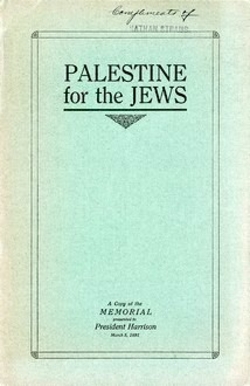
 The Blackstone Memorial, 1891: "Palestine for the Jews." |
This unabashed expression of Christian Zionism was signed by 413 prominent Americans, including the chief justice of the Supreme Court, the speaker of the House, the greatest industrialists of the day (Rockefeller, Morgan, McCormick), famous clergymen, writers, and journalists. The president promised to give it "careful attention"; and though he did nothing of the sort, Merkley credits the now-forgotten memorial, Palestine for the Jews, with "firmly planting in many minds" the "notion of American sponsorship of a Jewish return to Palestine."
The author dwells on other lost personalities and episodes.
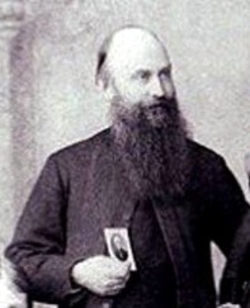 William Hechler (1845-1931), a British clergyman and ally of Herzl. |
In these and many other colorful stories, Merkley shows that today's Christian Zionists draw on a history going back a century-plus; and that their internal differences (over such matters as the need or not to convert the Jews) and the divided Jewish responses (whether to welcome or mistrust their help) also have a long pedigree.
July 15, 2003 update: I expand on this theme today in the New York Post at "[Christian Zionism:] Israel's Best Weapon?"


