
The 400,000 stateless Palestinians living in Lebanon live with many restrictions, not being allowed to attend public school, own property, or even improve their housing stock; on which, see Simon Haddad, "The Palestinian Predicament in Lebanon," Middle East Quarterly, September 2000, pp. 29-40.
These regulations exist to remind Palestinians that they remain refugees and one day must return whence they came, i.e., to Israel. In 1994, under Syrian influence, the Lebanese government relented a bit and distributed citizenship to tens of thousands of Palestinians. Now comes news, "Lebanon Reviews Status of Palestinians," that the government plans to revoke citizenship to many of those Palestinians.
This weblog entry will keep tabs of the Palestinian experience in Lebanon. (May 19, 2003)
June 28, 2005 update: In a reversal from two years ago, and perhaps related to the reduction in Syrian influence in Lebanon, the new government is making plans to permit Palestinians to obtain work permits, writes Rym Ghazal in the Daily Star.
The Lebanese government announced it will finally allow Palestinian refugees born in Lebanon to legally work at manual and clerical jobs in the country, ending 20 years of discrimination. In an official statement, Lebanon's outgoing Labor Minister Tarrad Hamadeh said: "From now on Palestinians born on Lebanese land and registered officially with the Lebanese Interior Ministry will be allowed to work in the jobs previously unavailable to them." The move brings Lebanon more in line with other Arab countries who long ago granted Palestinian refugees the right to work, and have in some cases offered them citizenship.
But despite the measure, the Lebanese government insisted a ban on Palestinians seeking professional employment will remain in place, meaning Palestinian workers will be restricted to manual and clerical work. There are around 400,000 registered Palestinian refugees living in Lebanon, 90 percent of whom were born in Lebanon and will be eligible to work. Anyone aged 57 and below will benefit from the work permit.
July 16, 2005 update: According to the Syrian Arab News Agency, a ranking figure in Hizbullah, Hussein Mosawi, reiterated his party's rejection of any talk about settling the Palestinians in Lebanon, saying that this "serves Israel" by "liquidating" the Palestinian question and particularly the right of return.
May 6, 2007 update: Bad as conditions are for the bulk of the roughly 400,000 Palestinians residing in Lebanon, there's a yet worse-off category, that of the document-less or "invisible" Palestinians, estimated to number between 3,000 and 5,000, as Nada Bakri explains in "Invisible Palestinians Exist in Legal Limbo in Lebanon." She tells the story of the Hamdallah family, starting with Moetaz Hamdallah, 65, born in Jerusalem, who arrived in Lebanon in 1970 from Jordan after the "Black September" uprising. Expelled from Jordan, Hamdallah reached Lebanon at a moment when the Palestine Liberation Organization ran southern Lebanon, so he did not bother legalizing his status with the Lebanese state. "The revolution was strong, I was strong. I never thought about identification papers or what would happen to me and to my children without them."
But when the P.L.O. was driven out of Lebanon in 1982, "I started pitying myself," he said as he sat on a plastic chair outside his concrete-block house in the Rashidieh refugee camp in southern Lebanon. Inside, flies buzzed under a zinc roof and unpainted walls. Mr. Hamdallah did not flee when Israel was formed over the former Palestine in 1948, and so he and his family did not meet the United Nations definition of Palestinian refugees. In Lebanon, the P.L.O. was blamed for igniting civil war, and so Mr. Hamdallah, like others with his background, were not welcomed. ...
Three generations of the Hamdallah family have lived in Lebanon. And for three generations not a single member of the family has been allowed to graduate from school, legally marry, or hold a job, or even set foot outside of the rundown camps that have been home to generations of Palestinians. ... they cannot get identification cards, the currency of all life transactions in this region. Marriage, travel, work all are impossible without a national identification document. "They are not persons in front of the law," said Stéphane Jacquemet, regional representative for the United Nations High Commissioner for Refugees in Lebanon. "They live in camps, don't have access to services, schools, hospitals, and strictly speaking a person with no documents can be arrested. They absolutely have no future, and they are giving their no future to their children." ...
When Mr. Hamdallah's oldest son, Mohannad, 34, was a child, he asked his father why he did not have an identification paper like his fellow classmates. He was told that he would get papers when they returned home meaning Jerusalem, he said. Recently, when Mohannad Hamdallah was asked how he would respond if his 7-year old daughter, the oldest of a third generation of refugees in his family without identification, someday asks him why she cannot graduate from school, he thought for a moment before answering. "I would tell her they were burned during the war," he said.
Oct. 17, 2007 update: In a twelve-thousand-word study, "Lebanon: Exiled and suffering: Palestinian refugees in Lebanon," Amnesty International comprehensively reviews the circumstances of Palestinians living in Lebanon, whom it says are living under "appalling social and economic conditions." Here are some excerpts from the introduction:
Today, some 300,000 Palestinian refugees reside in Lebanon and constitute nearly a tenth of the country's population.... They also remain subject to various restrictions in the host country, Lebanon, which places them in a situation akin to that of second class citizens and denies them access to their full range of human rights, even though most of them were born and raised in Lebanon. ... Just over half – some 53 percent - of Palestinian refugees who live in Lebanon, reside in war-torn, decaying and poverty-stricken camps. The conditions for those living outside the camps in towns, "gatherings", villages and rural areas, are also poor.
The report finds they suffer "systematic discrimination" and states that
The life is being choked out of their communities, forcing the young and healthy to seek jobs abroad and condemning the rest to a daily struggle for survival. Most Palestinian refugees in Lebanon have had little choice but to live in overcrowded and deteriorating camps and informal gatherings that lack basic infrastructure. The amount of land allocated to official refugee camps has barely changed since 1948, despite a fourfold increase in the registered refugee population. The residents have been forbidden by law from bringing building materials into some camps, preventing the repair, expansion or improvement of homes. Those who have defied the law have faced fines and imprisonment as well as demolition of the new structures. In camps where additional rooms or floors have been added to existing buildings, the alleyways have become even narrower and darker, the majority of homes receive no direct sunlight and, despite the best efforts of the inhabitants, the pervasive smells of rubbish and sewage are at times overwhelming. ...
The ghettoization of Palestinians is intensified by the constant military presence around the camps in southern Lebanon. Each time refugees want to leave or return to their homes, they have to pass an army checkpoint and show their documents, reinforcing a perception that they are outsiders and a potential threat, rather than refugees in need of protection. The discrimination and marginalization they suffer is compounded by the restrictions they face in the labour market, which contribute to high levels of unemployment, low wages and poor working conditions. Until 2005, more than 70 jobs were barred to Palestinians - around 20 still are. The resultant poverty is exacerbated by restrictions placed on their access to state education and social services.
Apr. 23, 2008 update: In a statement seemingly out of nowhere, Mahmoud Abbas told reporters as he traveled to Washington that Israel and the Palestinian Authority (PA) are dealing with the issue of Palestinian refugees and, "If a deal is signed between Israel and the PA, no Palestinian refugee will be left in Lebanon."
Comment: Given that the Olmert government certainly is not about to allow 300,000 Palestinians from Lebanon into Israel, Abbas seems to be implying that he expects to reach an agreement with Israel that permits them to settle in the West Bank and Gaza. If so, that is news because until now, the PA has insisted that refugees must be settled into Israel, not the territories.
Oct. 1, 2008 update: The Norwegian Refugee Council has published a 77-page analysis, Legal Assessment of Housing, Land and Property Ownership, Rights, Transfers, and Property Law related to Palestinian Refugees in Lebanon. Its purpose:
This report examines housing, land and property ownership, as well as rights, transfers, and law related to Palestinian refugees living in the Gaza Compound in Sabra, Nahr el-Bared Refugee Camp in North Lebanon and the adjacent area to Nahr el-Bared (hereafter the Adjacent Area) in order to better understand their situation. The report proposes a series of recommendations to assist the Norwegian Refugee Council and the broader humanitarian community to improve the housing, land and property ownership rights of Palestinian refugees in Lebanon.
The report also has this information (p. 20) on the legal prohibitions on Palestinian ownership:
The Presidential Decree 11614 of 1969 as amended by Law No. 296 issued in April 2001 stipulates the following provisions:
No real right of any kind may be acquired by a person who does not carry a citizenship issued by a recognised state or by a person if such acquisition contradicts with the provisions of the Constitution relating to the prohibition of permanent settlement of Palestinians.
- Even though the provision includes all people who do not carry a citizenship issued by a recognised state, it is quite clear from the interpretation of the Law that the amendment is directly aimed at prohibiting Palestinians from property ownership. The rights of Palestinians were affected greatly by the new Law; previous to the amendment, Palestinians were able to own a maximum area of 5 000 square meters without a prior permit.
- The Law imparted a wide range of new prohibited legal actions. It prohibits Palestinians from the acquisition of all real rights, including the transfer of real rights by inheritance, donation, testament, etc., any lease contract for a period of 10 years and above is subject to a prior license and the real rights of a deceased Palestinian cannot be transferred to the Palestinian heirs but become the property of the Islamic Waqf.
Feb. 25, 2009 update: Politicians make pronouncements but on the ground things remain unchanged. Indeed, as Time magazine puts it, "For most of the 220,000 Palestinians living in refugee camps in Lebanon, time has stopped." Its article today focuses on Abdullah Sulhani, 85, and his family. Reporter Andrew Lee Butters portrays them as
caught between a past they can't escape and a future they struggle to shape, renting out the top floors of their building — which technically they don't even own. Like the rest of the 400,000-odd Palestinians in Lebanon, they cannot legally buy a house or apartment and remain barred from some 70 professions. Lebanon's fragile sectarian political system, balanced between Christians and Muslims, has been unable or unwilling to absorb so many Muslim refugees. So neither Sulhani, nor his children, nor his grandchildren, nor his great-grandchildren have Lebanese citizenship, despite the fact that all but the family patriarch were born on Lebanese soil. "My life in this country has been one heartbreak after another," says daughter Ahlam. "I have no good memories."
Mar. 13, 2010 update: Palestinians have historically fared better in Jordan than in Lebanon, but even in Jordan, they live on the edge as indicated by a story tody by Michael Slackman, "Some Palestinian Jordanians Lose Citizenship." As usual the reason/pretext has to do with not letting Palestinians get too comfortable outside of Israel:
AMMAN, Jordan — Muhannad Haddad grew up here, went to school here, got a job in a bank here and traveled to foreign countries with a passport from here. Then one day the authorities said he was no longer Jordanian, and with that one stroke they took away his citizenship and compromised his ability to travel, study, work, seek health care, buy property or even drive.
The authorities effectively told him they were doing it for his own good. They said that like thousands of other Jordanians of Palestinian descent, he was being stripped of his citizenship to preserve his right to someday return to the occupied West Bank or East Jerusalem. "They gave me a paper that said, 'You are now Palestinian,' " he said, recalling the day three years ago that his life changed.
In a report titled "Stateless Again," issued last month, Human Rights Watch said that 2,700 people in Jordan lost their citizenship from 2004 to 2008, and that at least another 200,000 remained vulnerable, largely those who moved abroad at some point in search of work.
The government says it is trying to help by requiring Jordanians of Palestinian descent who fled the West Bank or Jerusalem after the war in 1967 to keep their Israeli documents valid. This has become a more urgent matter recently, political analysts and government officials said, with the accession of a right-wing Israeli government and its ultraconservative foreign minister, Avigdor Lieberman. "It is no secret that some elements in Israel would like to see the Palestinian areas without the people," said Nabil Sharif, Jordan's minister of state and a government spokesman. "We do not want to be party to this."
Aug. 17, 2010 update: Palestinians in Lebanon have greater rights of employment following passage of a bill. In brief, according to Nada Bakri of the New York Times, they now enjoy "the same rights to work as other foreigners, a step in ending years of discrimination that had restricted them to the most menial of jobs." Some details:
the bill was a step forward in improving their status, but fell far short of alleviating their isolation in 12 camps scattered across Lebanon, where many rely on employment with United Nations agencies or settle for low-paying jobs in construction and services. ... The law lifts restrictions on Palestinians' employment in the formal labor market, though they would still be officially treated as foreigners. They would be barred from working as engineers, lawyers and doctors, occupations that are regulated by professional syndicates limited to Lebanese citizens.
Though the law fell short of some refugees' hopes, many welcomed it, in particular the law's granting of access to social security benefits to refugees. "I am 51 years old, born and raised here, and this is the first time I feel like I am a human being," said Abu Luay Issawi, who owns a grocery store in Mar Elias, a refugee camp in Beirut. Electricity was out in the camp on Tuesday. No water was running, as is the case almost every day in Mar Elias, which is overcrowded and lacks basic infrastructure.
Mr. Issawi said he had graduated among the top of his class from Beirut Arab University more than two decades ago with a degree in engineering, but was never able to find a job here. "I don't remember anything about engineering," he said. "But it is nice to know that my son will have a better future." His neighbor interrupted him. "If I am going to live and die here, then I want all my rights," Youssef Ahmad, 52, said. ...
Still, much remains to be done for Palestinians to live normal lives:
Palestinian refugees, who constitute nearly a tenth of the country's population, have long been denied basic rights in Lebanon. They are not allowed to attend public schools, own property or pass on inheritances, measures Lebanon says it has adopted to preserve their right to return to their property in what constitutes Israel now.
The legislation does not address any of those issues, though some lawmakers have said they may push for greater rights in coming months. "The second battle is the right to own property," said Walid Jumblatt, a lawmaker and Druse leader who introduced the legislation in Parliament.
Mar. 2, 2011 update: Josh Wood updates the ongoing saga at "The Palestinians' Long Wait in Lebanon" in the New York Times:
Six months ago, the Lebanese government was internationally applauded for passing legislation granting the Palestinian population the right to work. But real changes remain to be seen. On Feb. 22, the caretaker labor minister, Boutros Harb, signed a decree on carrying out the August 2010 labor law amendments. Final approval by the Shura Council, the country's highest court, is now awaited. Meanwhile, questions about the potential effectiveness of the legislation and the employment situation of the refugees linger.
"What we have now is, we have a legal framework, we have a technical framework," said Nada al-Nashif, the regional director of the International Labor Organization, an agency of the United Nations. "These are logistical parts of the equation. "Now of course you have to overcome lots of mistrust, a lack of confidence, lots of fears imbedded in the system through a rather negative experience over the years, for the Palestinian population especially."
Sari Hanafi, an associate professor at the American University of Beirut, predicts that the change "will have a tiny impact" because Palestinians will still be barred from working in such professions as medicine, law, and engineering. "Unless the liberal professions are addressed," Hanafi insists, "this law doesn't have any impact." Also, the article cites a December 2010 study released by the American University of Beirut which found just 37 percent of working-age Palestinians living in Lebanon employed.
June 3, 2011 update: The law firm of Allem & Associates has posted a study on Foreign Ownership of Real Estate in Lebanon.
Mohammed Rashid Qabbani, the Sunni mufti of Lebanon.
June 16, 2011 update: Slightly off topic but indicative of attitudes toward Palestinians in Lebanon: Mohammed Rashid Qabbani, Sunni mufti of Lebanon, told off a Palestinian delegation in his office to discuss Palestinian encroachments on state-owned and Islamic waqf (mortmain) lands, "We've hosted you and no longer want you."
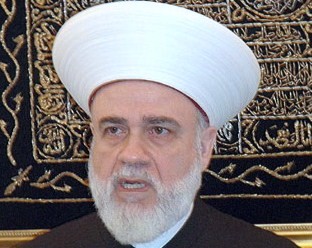
Accusing Palestinians of "usurping" Waqf lands to build houses, Qabbani told his visitors: "I will defend Waqf lands – even if that costs me all what I have." Attempts by the Palestinian representatives to muzzle the mufti further enraged the top religious official, who at one point shouted at them: "You are trash. You [Palestinians] will never be victorious. Nor will your cause. I'm no longer afraid of your weapons." ... The furious mufti later kicked the Palestinian representatives out of his office.
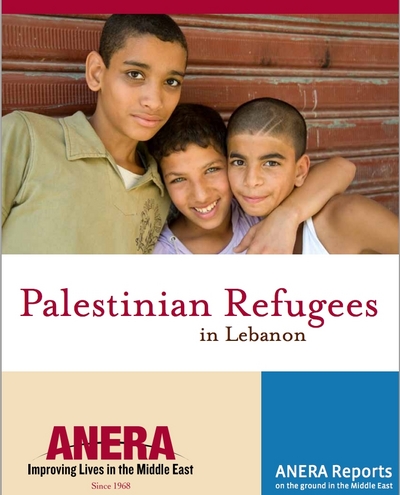 June 1, 2012 update:The American Near East Refugee Aid (ANERA) has published a study titled "Palestinian Refugees in Lebanon" that covers this population's problems in some detail. It lists problems but, presumably out of political discretion, does not lay blame on anyone for them.
Sep. 10, 2012 update: Picking up on the Jordanian topic initiated above (see the Mar. 13, 2010 update), Ali Younes suggests in "Revoking citizenships: The future of Palestinians in Jordan" that denying Palestinians Jordanian nationality has not to do with priming them against Israel but concerns internal tensions in the kingdom. Younes quotes Bassam Badareen a foremost expert on this issue: "Denationalizing Jordanian citizens is carried out by secret instructions by a secret committee within the intelligence and security agencies and its sole purpose is to scare the Palestinians in Jordan from demanding their civil and electoral rights."
June 21, 2013 update: Khaled Abu Toameh writes today about "Lebanon's Apartheid Laws" and, unlike ANERA, has no hesitation in assessing blame:
About three years ago, the Lebanese government decided to amend its Apartheid law that denies Palestinians the right to work in as many as 20 professions. Then, Palestinians were told that from then on they would be able to work in many professions and even own property in Lebanon. But now Palestinians have discovered that the Lebanese government, like most Arab countries, has lied to them. ...
Palestinians in Lebanon are banned from working as doctors, dentists, lawyers, engineers or accountants. By contrast, anyone visiting an Israeli hospital or medical center would quickly notice the presence of a significant number of Arab doctors, nurses and pharmacists.
Yet, although three years have passed since the law was amended, nothing has changed for the Palestinians in Lebanon. And there is no indication whatsoever that the Lebanese authorities intend to ease restrictions imposed on Palestinians in the foreseeable future. ...
Human rights activists say the Lebanese government is now using the war in Syria and its impact on Lebanon to avoid abolishing the Apartheid laws. This, of course, is a weak excuse: the anti-Palestinian Apartheid laws have been in effect long before the crisis in Syria erupted.
Sep. 17, 2015 update: Ma'an news service has an article today describing the misery of life for Gazans (as opposed to West Bankers) in Jordan.
Apr. 1, 2019 update: Khaled Abu Toameh reports on the Haqqi (or Hakki) campaign and other developments at "Why Palestinians are Fleeing Lebanon."
Jun. 6, 2019 update: Pinhas Inbari reviews "The Fate of Palestinian Refugees in Syria and Lebanon" in light of recent developments.
July 17, 2019 update: Are the Palestinians of Lebanon finally to change their status? Pinhas Inbari writes in "The New Palestinian Intifada – In Lebanon" that they "have erupted in a new kind of Intifada: demanding integration in Lebanon." This results from several factors: a Lebanese Ministry of Labor crack down, the huge influx of Syrian refugees, and Trump appearing to negate the Palestinian "right of return."
July 19, 2019 update: More on this topic by Khaled Abu Toameh at "The 'Slow Death' of Palestinians in Lebanon."
Sep. 20, 2019 update: The drama continues. Khaled Abu Toameh asks:
Are the Lebanese seeking to get rid of the Palestinians living in Lebanon? Many Palestinians seem to think that the Arab country they have been living in for decades has plans to throw them out. Palestinian factions, meanwhile, are working in precisely the opposite direction, trying to stop the Palestinians from leaving their refugee camps. The factions want the refugees to continue living in misery and poverty so that they can continue to use them as pawns in the conflict with Israel..
May 8, 2020 update: COVID-19 has exacerbated the plight of Palestinians in Lebanon, Khaled Abu Toameh explains.
Jan. 28, 2021 update: Bassam Tawil notes that the coming of the COVID-19 vaccine has exacerbated the bigotry toward Palestinians living Lebanon, with calls for natives to be vaccinated ahead of "foreigners," meaning Palestinians.
Feb. 10, 2022 update: Khaled Abu Toameh summarizes a recent report on Palestinians in Lebanon in the Lebanese newspaper Al-Akhbar. Some highlights:
- Five thousand homes belonging to Palestinians in Lebanon are at risk of collapsing but the authorities there ban "water pipes, electrical cables, wooden and iron doors, windows, cement, gravel, sand, tiles, water tanks, aluminum, glass and paint materials."
- Being classified as "foreigners, refugees or stateless people," they are prohibited from acquiring real estate in Lebanon without a permit. Palestinians in Lebanon have long been prevented from practicing such professions as medicine and law, given that only the Lebanese could join professional syndicates.
- They are prohibited from practicing thirty-nine professions, including in healthcare, transport and fishing, services and daycare, engineering, law, tourism, and accounting.
- UNRWA found that them in Lebanon are at risk of food insecurity, electricity blackouts, increased health problems and complications amid the shortages of medicine and health-care interventions.
And Israel is called an apartheid state?
Aug. 29, 2025 update: After Israel's drastic weakening of Hezbollah, the perpetually weak Lebanese state has found the strength to demilitarize the Palestinian-dominated areas of its country. That in turn has led to a hope for an improvement in the status of Palestinians in Lebanon:
Ramez Dimashkieh, head of the Lebanese-Palestinian Dialogue Committee, a government body that serves as an interlocutor between Palestinians in Lebanon and state officials, said his group is working on proposed legislation that they hope to introduce by the end of the year that could improve the situation of Lebanon's approximately 200,000 descendants of Palestinian refugees.
The Palestinians, who are all recognized by the UN as refugees despite the vast majority of them not having been displaced during their lifetime, are not given citizenship in Lebanon, ostensibly to preserve their alleged right to go back to the homes they fled or were forced from during the regional mass displacements surrounding the 1948 creation of the State of Israel. They are prohibited from working in many professions in Lebanon, have few legal protections, and cannot own property.
The proposed legislation being drafted would still not confer Lebanese nationality on the Palestinians, Dimashkieh said, but would strengthen their labor and property rights. "If people see a serious move forward in terms of arms delivery and they see the Palestinians here... are serious about transforming into a civil society rather than militarized camps, it will make the discourse much easier," he said.


